
7 Powerful Differences Between Browser vs Search Engine That Every Business Owner Must Understand in 2026
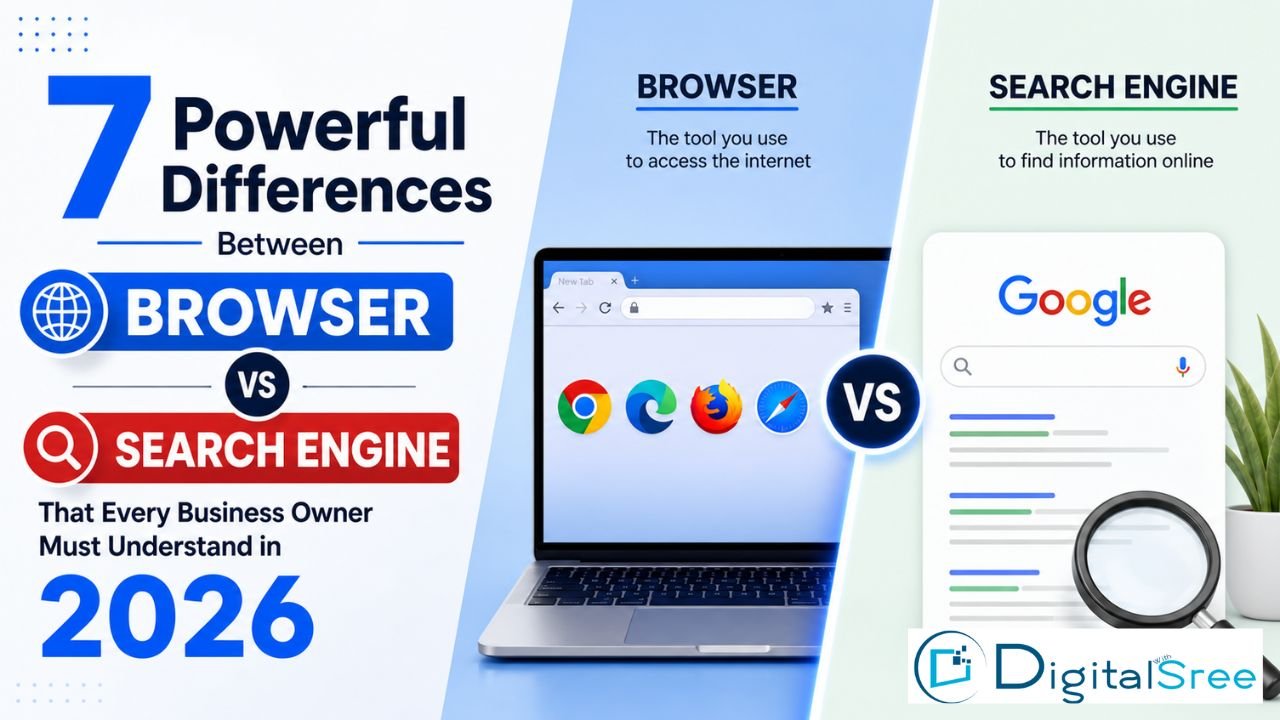
Have you ever mistook Google Chrome for Google Search and thought the two tools were the same thing? Don’t feel foolish; many business owners use both tools regularly without realising they are two distinct things – and that could be costing your visibility online. Without understanding the difference between browser vs search engine, your content never ranks and competitors show up where they should. But by the end of this post you will know exactly how both work so that your SEO, AEO and GEO strategies will all improve significantly!
Search in 2026 is no longer solely about Google rankings — AI platforms such as ChatGPT, Perplexity, and Google AI Overviews offer additional visibility opportunities, shaping the Future of AI-driven search and digital discovery. So whether you are an upstart startup, small business owner or expanding brand – here is your chance for digital clarity!
What Exactly Is a Browser?
What Is a Search Engine?
A search engine finds web pages with relevant information based on a user’s needs. Understanding the concept of browser vs search engine is important because while a browser takes you out into the corpus of the internet, a search engine helps you navigate it. Examples of search engines include Google, Bing, DuckDuckGo, and Perplexity.
When a user types a request, the search engine sorts through a staggering billions of pages and delivers the most appropriate results. In the discussion of browser vs search engine, search engines handle the three key processes known as crawling, indexing, and ranking. Crawlers sift through pages and sort them, indexes organize the content, and ranking systems evaluate pages based on hundreds of signals such as relevance, authority, and user experience.
As the head of a business, here is an insight to optimize your search engine visibility. When a customer initiates a search related to your business product or service, it is as if they are signaling, “I need this!” The obvious question that follows is, are you on the results page when they do?
In the year 2026, search engines beyond Google will be the norm. Things like ChatGPT Search, Perplexity AI, and Google AI Overviews will respond to queries directly rather than simply sourcing content. This change will require content to be optimized not only for search effectiveness but also for AI-based discoverability.
Web Browser vs Search Engine: The 7 Key Differences
Web browser vs search engine may seem obvious to the average internet user, but understanding the differences between the two is the first step in developing an effective digital strategy. Let’s detail the 7 main elements.
1. What it is: A browser is a software application. A search engine is an online platform that indexes and retrieves information.
2. Purpose :A browser opens and displays websites. A search engine finds and ranks websites based on your query.
3. Examples :Browsers include Chrome, Firefox, Safari, and Edge. Search engines include Google, Bing, Perplexity, and ChatGPT Search.
4. Role in SEO: Browsers affect your website’s technical performance and user experience. Search engines directly determine where your website ranks in results.
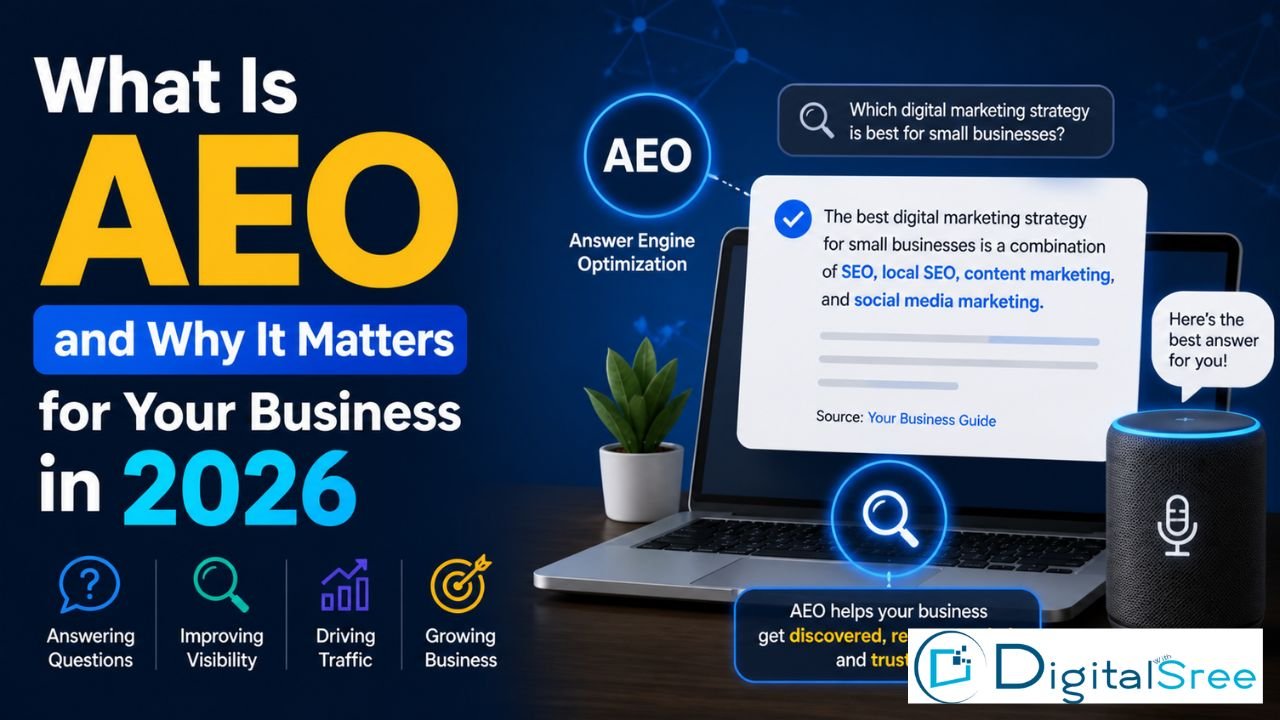
5. Role in AEO :Browsers play no direct role in AEO. Search engines power featured snippets, People Also Ask boxes, and voice search results — all core to AEO.
6. Role in GEO :Browsers are not involved in GEO. Search engines and AI platforms like ChatGPT and Perplexity are the core channels for GEO in 2026.
7. Business impact: Browsers impact how your website looks and performs. Search engines impact whether your customers find you at all.
How Does a Search Engine Actually Find Your Business?
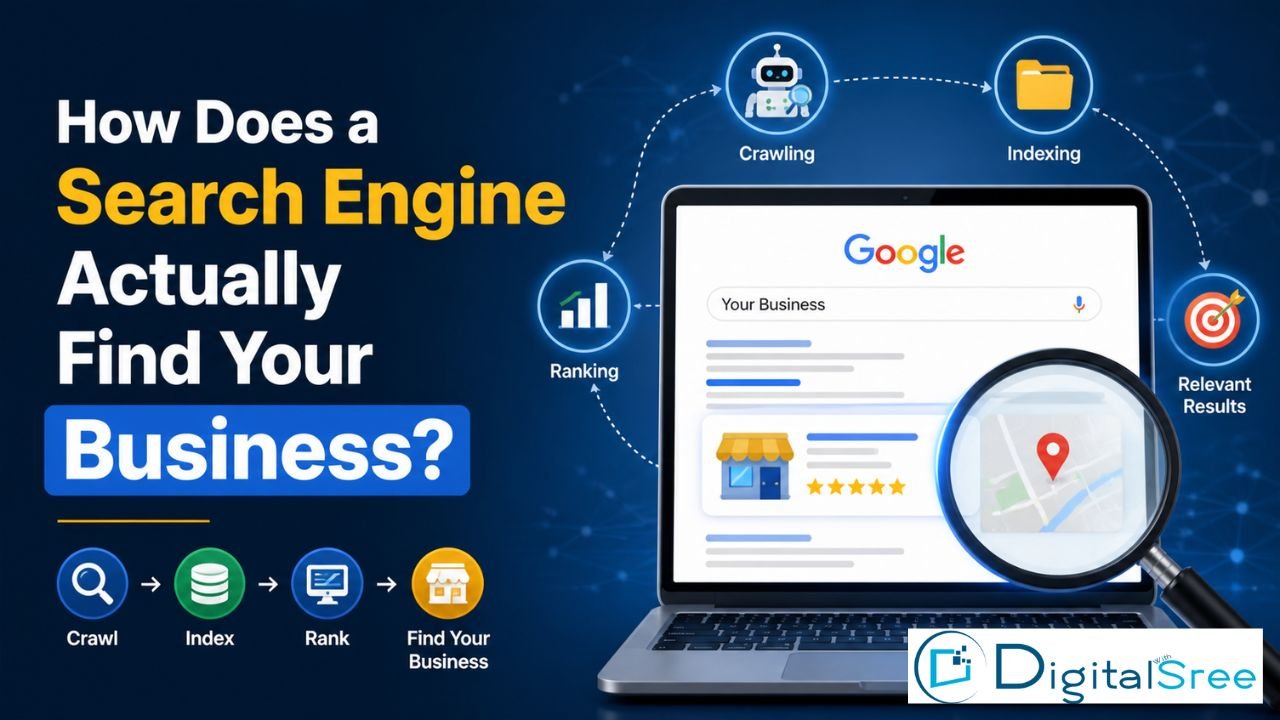
Every business owner already knows they need to “be found on Google” — fewer, however, are able to interpret how exactly Google “finds” and “grades” them. Understanding the concept of browser vs search engine is essential because many people still confuse the tools used to access the internet with the platforms that actually discover and rank websites. Here’s the basic breakdown:
1. Crawling – Every search engine has an automated program term called a “crawler,” that perpetually roams the internet for new webpages. The crawlers “visit” your webpages, which allows them to “read” whatever content is present.
2. Indexing –After having been “visited,” the content is placed into the search engine’s “index,” which is the gigantic library of every single webpage that the search engine has discovered.
3. Ranking –When a user inputs a search that is somewhat related to your business, the search engine reaches into its index for the most relevant pages and “marks” them in descending order based on the quality of the content, number of “backlinks,” page loading speed and quality on mobile devices, friendliness, and also something called E-E-A-T.
2026 has also seen major shifts in crawling and indexing. AI has integrated itself into the mix, making the understanding of browser vs search engine more important than ever. Today, content must be written for a human audience in order to be crawled, “graded,” and governed by AI systems. In the evolving world of browser vs search engine, writing enthusiastic, honest, and clear content for your readers is what has “always won” and what “always will.”
What Is AEO and Why It Matters for Your Business in 2026
What Is GEO and How AI Search Is Changing Everything in 2026
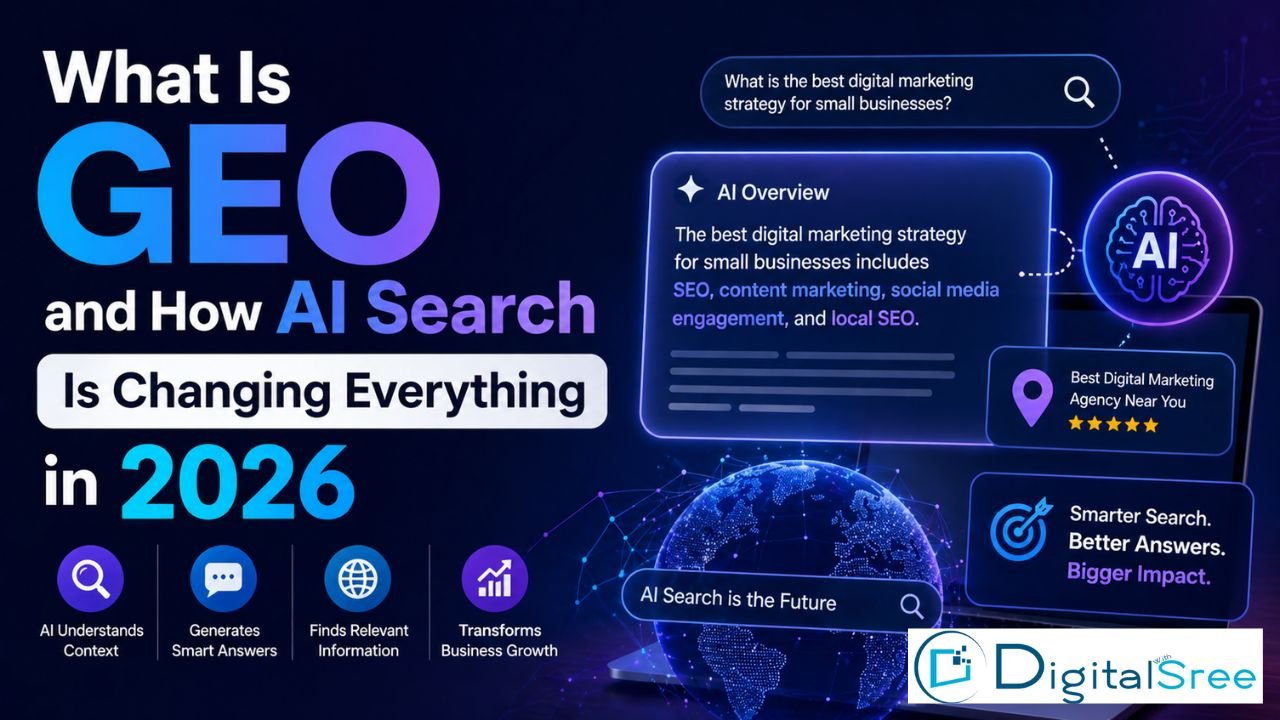
GEO is Generative Engine Optimization. It is the future of digital marketing. If you are reading this, you are among the few businesses already exploring this opportunity, while many companies in India are still unfamiliar with it. Understanding concepts like browser vs search engine is becoming increasingly important as AI-driven discovery changes how users find information online.
GEO allows you to fine-tune your digital marketing content so that AI engines like ChatGPT, Perplexity AI, Google AI Overviews, and Bing Copilot can cite your content and reference your brand while assisting users with their questions and searches.
For example, consider this. If someone asks ChatGPT, “Who is the best digital marketing consultant in Kerala?” the AI system will source information from the most trustworthy, well-structured, and authoritative websites available online. If your website and content are of exceptional quality, your brand could become one of those references. This shift also changes the traditional understanding of browser vs search engine, as users increasingly receive direct AI-generated answers instead of manually browsing websites.
By 2026, GEO will become one of the most important digital marketing strategies alongside SEO. Businesses implementing GEO strategies today will likely stay far ahead of competitors who focus only on traditional Google rankings.
To succeed with GEO, your content must be original, accurate, clear, and trustworthy. It is not about manipulating algorithms — it is about creating content that genuinely deserves to be cited and recommended by AI systems.
Browser vs Search Engine: What This Means for Your Digital Marketing Strategy
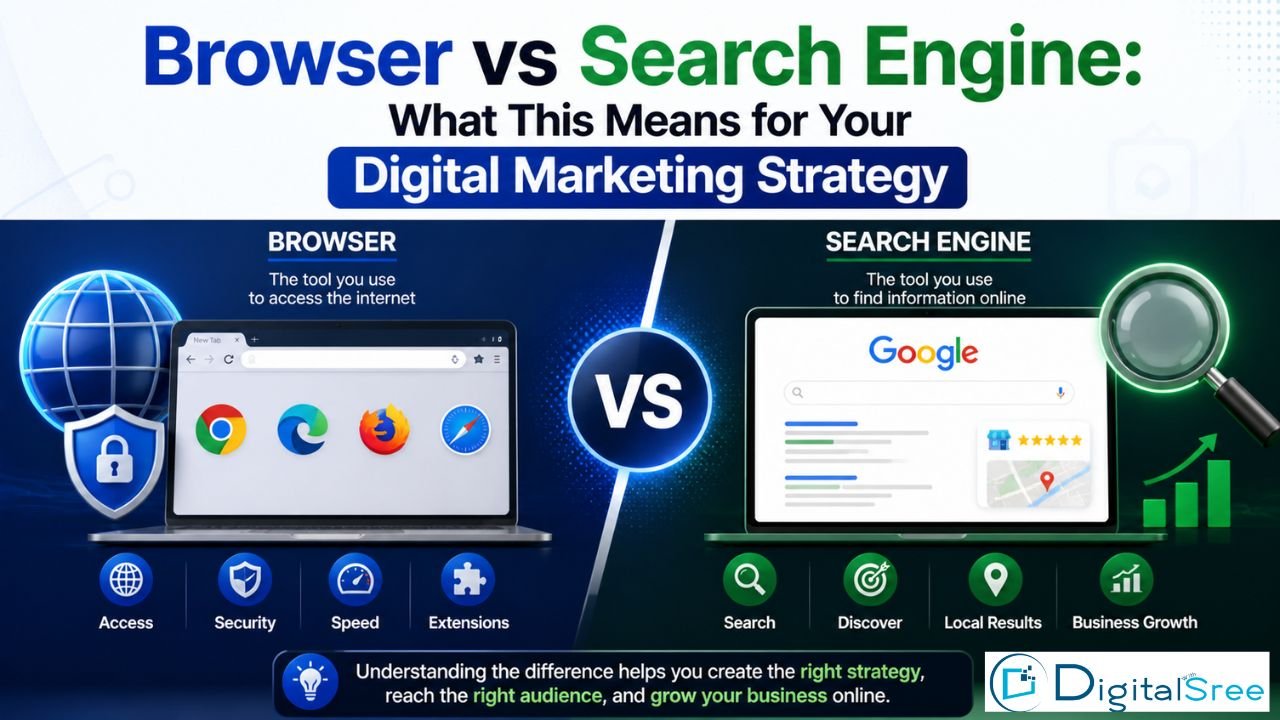
Your browser is your delivery vehicle — it determines how visitors universally digitally experience your business website. Your search engine is your discovery channel — it determines if visitors ever discover your website.
A well-crafted digital marketing strategy 2026 will observe all three levels.
2. Artificial Intelligence (AEO): guarantees that your business will digitally market and advertise through featured snippets, voice searches, and commercial answer boxes to customers who will search without scrolling.
3. Generative Artificial Intelligence (GEO): guarantees that brand will be quoted and referenced by artificial intelligence like ChatGPT and Perplexity persuading customers that your business is the best and most trustworthy in your sector.
Leaving any of these three will leave business customers uninterested, and can result in a frustrated income. Winning businesses who will be market leaders 2026 will be the ones who design and implement simultaneous digital business strategies for all three.
Common Myths About Browsers and Search Engines
1 — Google Chrome and Google Search Are the Same Thing
Chrome is a web browser. Google.com is a search engine. Confusing the two and combining their functions leads to misuse. Misuse of your browser leads to neglecting browser optimization, which happens to affect your experience directly and subsequently affects your conversion the most.
2 — SEO Only Means Ranking on Google
By the year of 2026, SEO has grown well beyond the Google blue links. An effective SEO strategy would implement AEO optimization for embedded search results and audio searches, and GEO optimization for visibility on AI platforms.Neglecting optimization for AEO and GEO would mean neglecting the majority of new search patterns.
3 — If My Website Works on Chrome It Works Everywhere
Chrome is the dominant browser, but customers may be using Safari, Firefox, or Edge. A website that breaks on any of these browsers means broken conversion and failed revenue. Always test across the primary browsers.
4 — AI Search Is Only for Big Brands
Small and medium sized businesses with AEO and GEO will outrank large businesses with poorly structured content in multiple AI search results. The opportunity for AI search results is unmatched.
Conclusion
The distinction between the browser and search engines could appear to be a minor technical issue, however, understanding the difference will be the initial step in creating a presence online that can help grow your business. Browsers deliver your website. Search engines determine whether users discover it. In 2026, winning on the internet will mean learning SEO, AEO, and GEO all in one while adapting to the future of AI in digital marketing. Are you ready to appear on Google or voice search and AI tools such as ChatGPT? Let us create your digital strategy for 2026 together.
FAQ
1. What is the difference between a browser and a search engine?
A browser allows users to navigate the internet, while a search engine helps users locate specific information once they are on the internet.
2. Is Google a browser or a search engine?
Google Chrome and Google.com are each examples of a browser and a search engine, respectively, and are separately developed products.
3. What is AEO in digital marketing?
AEO, or Answer Engine Optimization, is the practice of tailoring your content so that it is more likely to show up in featured snippets, voice search results, and AI answer boxes.
4. What is GEO in digital marketing?
Content that is written to be citation-worthy and referenced by AI tools, such as, ChatGPT and Perplexity is what Generative Engine Optimization (GEO) aims to accomplish.
5. How does understanding browser vs search engine help my business?
Our services give you an edge in terms of your overall digital presence by making sure your website is optimized for search engine performance, and is fully enhanced for both answer engine and generative engine optimization by 2026.