
What Is ORM in Digital Marketing? A Complete Guide for 2026
Nowadays, the first impression a consumer gets of a company comes from the results of a Google search or a social media review. This means that your online presence is now equally important as your product or service. This is where ORM in digital marketing plays a powerful role. Online Reputation Management, that is ORM helps brands determine how they are perceived online and ensures that potential customers are only presented with an image that is trustworthy and positive. Every business needs to be aware of an important fact: the consumer is the one who controls the conversation in today’s world. As the digital transformation is making every process faster, ORM in digital marketing has evolved into an integral part of it. If you are running an individual business, a new startup, or a major enterprise, maintaining a positive online reputation is no longer a choice; it will be essential by 2026.
What Is ORM in Digital Marketing?
In order to understand the power of ORM in digital marketing, it is essential to understand exactly what does Online Reputation Management truly means. ORM is a collection of methods and strategies that are designed to alter how the brand is perceived on the internet. It is focused on observing the online conversations and responding to feedback from customers as well as managing reviews and creating content that is positive and increases the trust of customers. In short, ORM shapes the narrative surrounding your brand’s name on the internet. The principle behind ORM in digital marketing is to make sure that when people search for your company, you will find positive, reliable, and also trustworthy information. It goes beyond simply responding to complaints from customers by creating interactions and thus establishing credibility which proactively providing value to your audience. ORM in marketing integrates customer service and content marketing with SEO and public relations to keep a positive online image.
Why does Online Reputation Matters More Than Ever
With the rise of digital competition the customers are offered many options when it comes to the same service or product. Most of the time, the important thing is not features or price but rather trust. A positive reputation can help companies attract more customers, and a poor reputation will make them lose customers immediately. In 2026, where consumers rely on a lot of internet-based sources, any small lapse will have lasting effects on the image of your brand. This is the reason why online reputation is more crucial than ever, as every opinion, review, or rating is public and could affect a consumer’s decision.
Today, every user interaction contributes to different types of conversions which are directly shaped by how customers perceive your online reputation. Before making a purchase, customers go through Google reviews as well as social media feedback and even testimonials on websites. ORM is a digital marketing method that ensures the potential buyers are presented with real and genuine information. When you manage your brand’s reputation properly, people feel more confident when choosing your brand. A well-managed brand appears not only reliable or professional, but has customer friendly qualities that immediately influence buying behavior.
Types of ORM in Digital Marketing
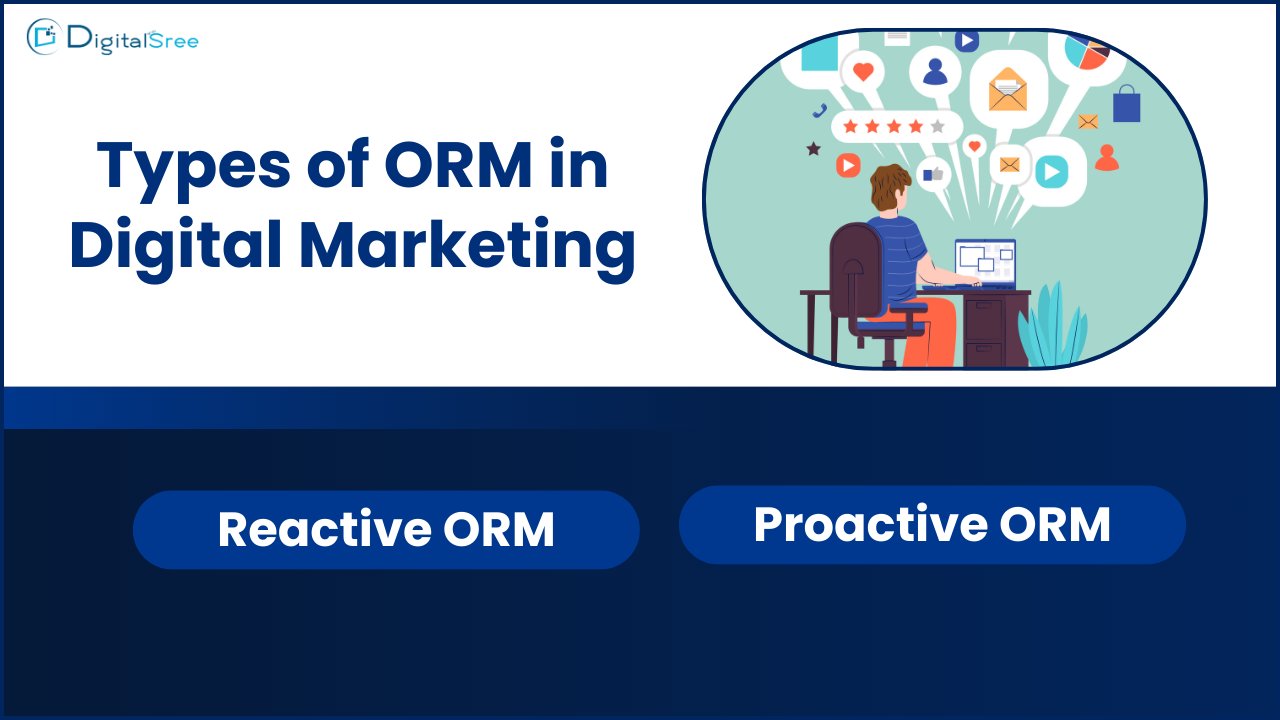
ORM in digital marketing comes in different forms based on how and when businesses respond to online conversations.
1. Reactive ORM - Responding to the Problems
Reactive ORM is the process of addressing the negative review, complaint or posts after they are published. This means responding courteously to the customer complaints, resolving them and preventing further damage. A Reactive ORM is one of the best practices for online crisis response or unexpected negative publicity.
2. Proactive ORM - Building an enviable presence prior to an Event
Proactive ORM concentrates on creating content that is positive before any problem arises. This means creating strong social media profiles, posting useful content, interacting with the public and enticing satisfied customers to leave reviews that are positive. A proactive ORM can help you build your reputation, so that in the event of you have a mishap your credibility is lowered the negative impact.
Personal ORM Vs Brand ORM
As we know the main two types of ORM in digital marketing are the reactive and proactive ORM. Also, on the basis of entity we can categorize ORM into personal and brand ORM. Personal ORM is for people such as influencers, entrepreneurs and professionals. Brand ORM is for businesses and companies. Both share the same objective–to keep a positive image, but the methods differ. Personal ORM concentrates more on individual professional image, identity and knowledge, whereas the brand ORM is focused on the satisfaction of customers in value delivery, as well as the reputation of a business.
ORM in Marketing: How It Fits into Modern Branding
ORM and marketing are tightly linked. While traditional marketing is focused on promoting a particular product or a service, ORM concentrates on creating trust. Modern branding demands an equilibrium between both. If a company builds trust with its customers, they naturally become more loyal and active. Traditional marketing tends to be only a one-way message where the brand is the one speaking and the public listens. ORM, however, is a more interactive approach. It is about listening to the feedback of customers and then responding in real-time and establishing relationships. As ORM strengthens trust and credibility, and thus brands monitor feedback to improve brand perception. Marketing is a way to raise awareness, whereas ORM seeks to establish credibility. Both are crucial, but ORM gives a sense of authenticity that consumers value.
The Role of ORM in Brand Perception and Building
The role of branding is determined by the perceptions of your customers on the internet. Positive reviews, positive responses, and openness help customers feel valued. ORM in marketing lets brands solve issues, respond to questions, and demonstrate genuine concern. If a company maintains consistent communication, it can build a positve impression on the customers which leads to trustworthiness. After some time, this impression can lead to loyalty among customers and makes the brand high value.
Some of the powerful tools for marketing include Social proof, reviews etc . Customers trust their fellow customers more than ads. A brand that has high ratings and positive reviews automatically gain credibility. ORM in marketing makes sure that reviews with positive ratings are highlighted while negative ones are dealt with professionally. Monitoring online can help companies to identify areas to improve their business and keep an excellent reputation for their brand on all platforms.
SEO and ORM: How They Work Together for Better Results
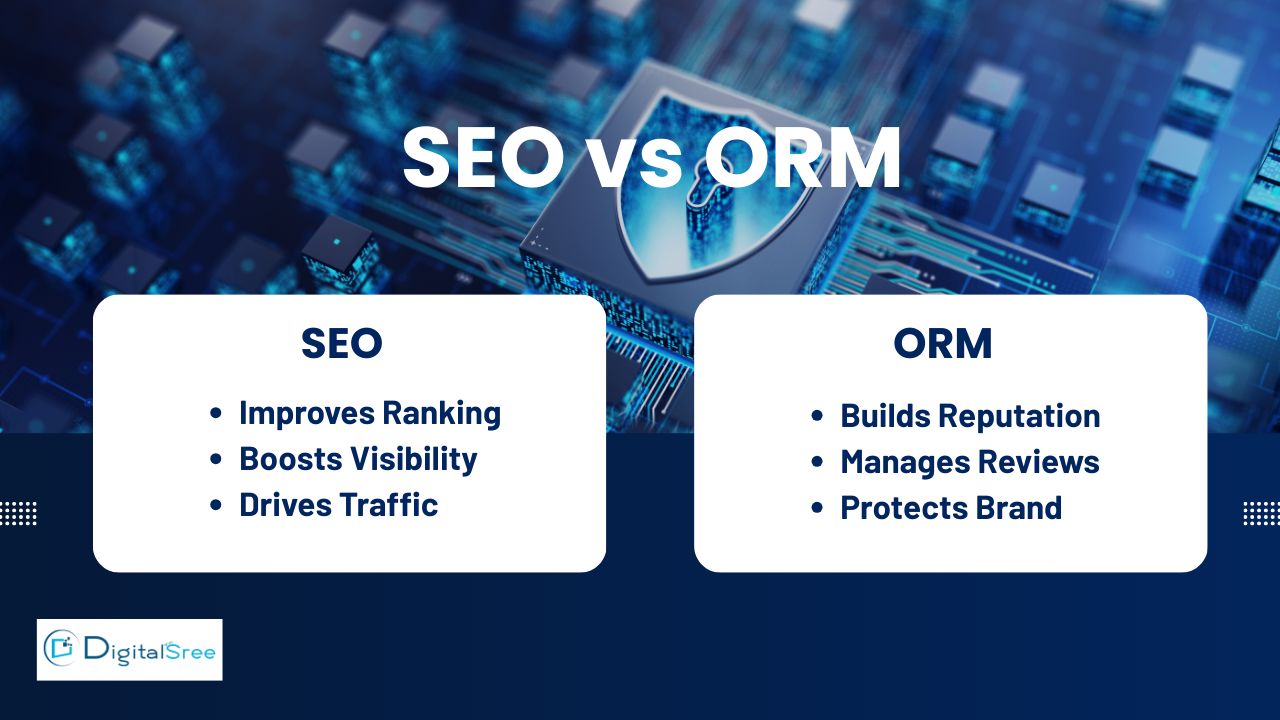
Many companies view SEO and ORM as two separate methods. However, they perform best when they are used together. While Search Engine Optimization or SEO- focuses on improving search engine rankings, Online Reputation Management (ORM) ensures those rankings are positive and is also beneficial. As we know, Google prefers high-quality content so it is better that your brand receives positive reviews which is credible. This indirectly boosts your SEO performance. A strong reputation also encourages users to click on your website, which improves your click-through rate- a key ranking factor.
Negative results, such as negative reviews, complaints or inaccurate content can hurt your reputation and rank. When people do not click on your results due to the fact that they are seeing negative information, Google interprets this as lack of relevance. This can cause your ranking to decrease. ORM assists in reducing negative effects by promoting quality content that makes them appear lower in results for search. Combining SEO and ORM helps create a robust digital footprint. We know that SEO improves visibility in search engine results whereas ORM assures credibility. So together, they can help you build an appealing image of your brand that draws and keeps your customers. Some of the things you can do to maintain a solid online presence includes publishing blogs and optimizing websites while managing reviews, as well as keeping active social media accounts etc.
Key Strategies for Effective ORM in Digital Marketing
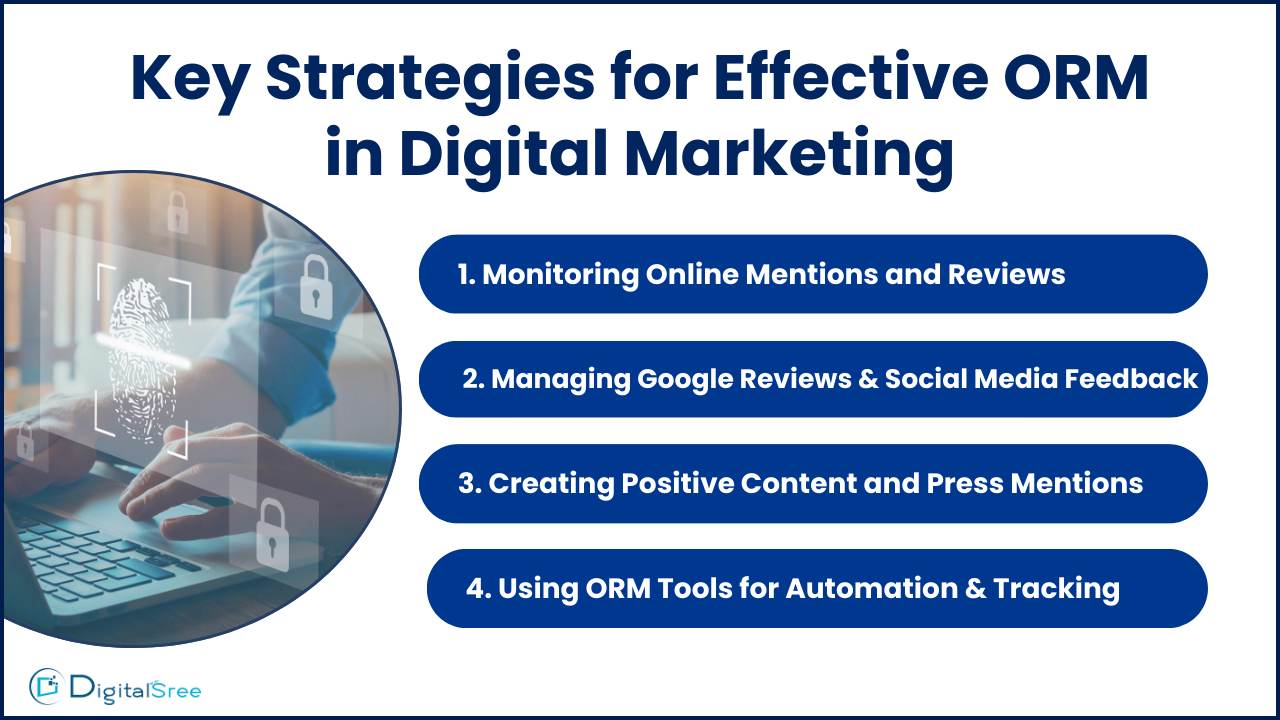
For the greatest outcomes, companies must adhere to an established set of strategies which help to preserve their online reputation.
1. Monitoring Online Mentions and Reviews
The initial step in ORM is to know what customers review about your company. Monitoring reviews, comments and mentions lets you keep track of feedback from customers. This lets you spot problems promptly and react quickly.
2. Managing Google Reviews and Social Media Feedback
Google reviews are among the most prominent indicators of reputation. Reacting professionally to both negative and positive reviews shows your customers that you are interested. This is also true for Facebook and other social platforms. When companies actively engage with their followers and create an image of trust and positivity.
3. Creating Positive Content and Press Mentions
Content plays a significant aspect of ORM in digital marketing. The publication of customer stories, blogs or case studies press releases help build credibility. Positive content helps push negative results down in Google search and reveals what you can do to strengthen your company’s brand.
4. Using ORM Tools for Automation & Tracking
ORM tools make it easier to manage the procedure of monitoring and managing reputation. They assist in tracking brand mentions, study the sentiment of people, and alert you immediately when someone speaks about your company. This makes the management of reputation easier and more effective.
ORM Tools You Should Know
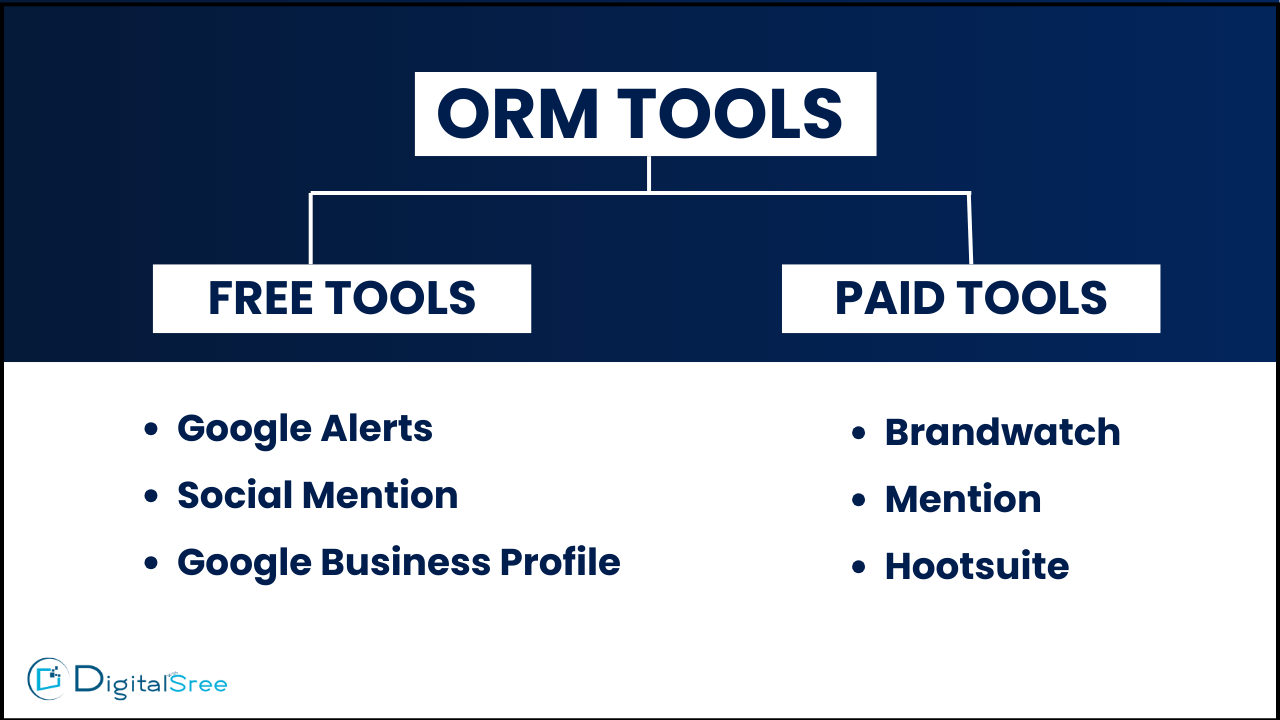
ORM tools can be categorized into two as free tools and paid tools. If we are able to understand the right tools, then it can help businesses manage their online reputation more efficiently. Let us look into what these tools are-
1. Free Tools
Free tools are best suitable for small businesses. Even though these tools are basic and offer limited features, they provide important overview of your online presence. These free tools include –
- Google Alerts- tracks mentions of your brand on the internet.
- Social Mention- analyzes the conversations that are taking place on social network.
- Google Business Profile- helps in managing reviews for free of cost.
2. Paid Tools
Paid tools are best suitable for medium to large businesses that require complete ORM management. Paid tools offer comprehensive analytics, automation and advanced tracking capabilities. These tools include-
- Brandwatch- gives deep insights into the sentiment of customers.
- Mention- monitors brand-related conversations in real time.
- Hootsuite- manages social interactions across multiple platforms..
CONCLUSION
A strong online reputation is more than marketing plan, but an investment in trust as well as satisfaction of the customer. ORM in digital marketing can help businesses establish credibility, gain customers and keep ahead of their competitors. With the growing influence of digital platforms by 2026, the significance of ORM in digital marketing will continue to increase. Thus the future of AI in digital marketing will make ORM even more advanced. A good reputation is among the most valuable assets a business can have from managing reviews all the way to generating a helpful content, every little action contributes to a better online presence. Companies who put their money into ORM will benefit from better visibility and stronger relationships with customers and will enjoy long-lasting trust. In a time where people are influenced by what they see on the internet, your reputation will be heard before your actions. Making it a priority to manage it well, ensure your brand is trustworthy as well as respected and chosen over other brands.
FAQ
1. What is the full form of ORM?
ORM stands for Online Reputation Management.
2. Why is ORM important for businesses?
ORM can help businesses establish credibility, gain customers and keep ahead of their competitors.
3. Is ORM part of digital marketing?
Yes, ORM is an integral part of digital marketing.
4. Can ORM remove negative reviews?
No, it is not possible to remove negative reviews, but ORM helps in managing and thus reduces their impact.
5. Is ORM a one-time process?
No, it is not a one time process as it requires continuous monitoring and improvement.