
What Is Personal Branding: An Introduction and Guide for Beginners (2026)
What is personal branding, and why does it matter today? In today’s complex digital environment, possessing skills alone is no longer enough; people must understand who you are and why they should trust you; thus it has become crucial that individuals cultivate personal branding skills. Their initial reaction can determine if an opportunity presents itself or whether or not an offer will come.
Personal branding is no longer reserved solely for celebrities or influencers – in 2026, personal branding can be an indispensable asset to help any professional advance his or her career, gain opportunities, and distinguish themselves in a competitive market.
Personal Branding Example
An Ideal Example of Personal Branding. Let's use a straightforward example as an illustration: Two digital marketers possessing equal skills are at opposing sides of an internet search:
- One does not share anything online while
- The other doesn't display their skills online at all
Whoever regularly shares tips, case studies, and insights is more likely to gain clients and job offers - this is due to people trusting what they see repeatedly.
Importance of Personal Branding
Understanding the Importance of Personal Branding. Recognising the significance of personal branding can make an extraordinary statement about yourself in your career journey. Here are the reasons why it matters.
- Content that Builds Trust and Credibility
By continuously sharing informative posts, people begin to see you as an authoritative figure. Trust is at the core of every opportunity - be it job offers, client contracts, or partnership agreements.
- Personal Branding to Help You Stand Out
With millions of individuals holding similar qualifications, personal branding allows you to distinguish yourself by emphasising your unique qualities and approach.
- An effective personal brand attracts opportunities like a magnet.
It draws clients, job offers, partnerships, and speaking engagements toward itself
- Increasing online visibility in the process.
As your online presence expands, more people will recognise it. Platforms such as Google, LinkedIn, and Instagram reward those who regularly create content online.
- Personal Branding Is Key for Long-term Career Success.
Unlike employment contracts, your personal branding remains with you throughout your lifetime and serves as an asset that only becomes more valuable with time.
Fundamental Elements of Personal Branding
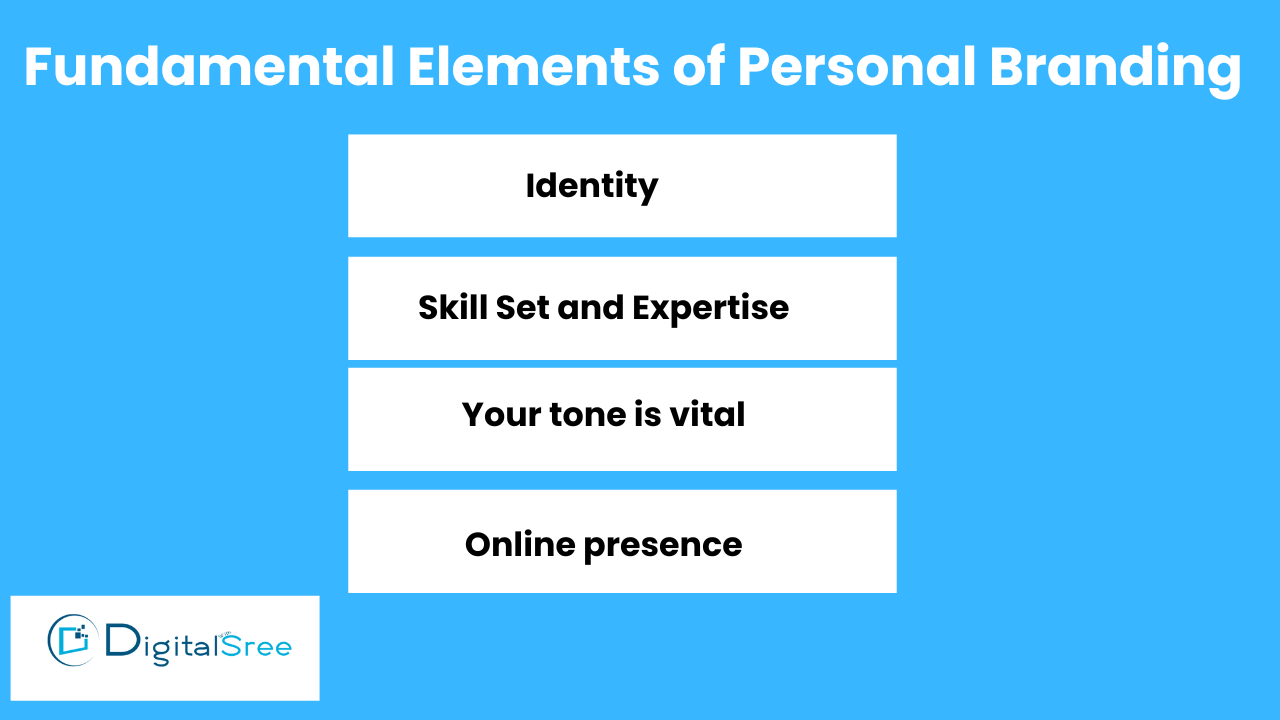
When creating an effective personal brand, it is vitally important to prioritise certain components that are crucial for its creation.
1.Identity
For any image to succeed, it's crucial that it stands out from its competition.
Define:
Your target market
Your goal
Values and Intention
E:g. "Helping beginners begin freelancing "
2. Skill Set and Expertise
To be successful, it is essential to determine your strengths prior to investing your time and energy into building them into skills that will allow you to take that next stage.
Tips: Make steps to improve a specific ability or skill until it is well-known among your colleagues
3.Your Tone Is Vital.
Finding your distinctive voice in your communication is essential, whether it's
- Academic
- Motivational
- Casual
People will be more connected by using a similar tone regardless of the situation.
4.Online presence
- Web/Blog (for posting blog posts and other content),
- YouTube
-
How to Build a Personal Brand (Step-by-Step Guide)
Do You Want to Develop Your Personal Brand? Step-by-Step Guide: To have a more enjoyable experience creating your personal brand, follow this step-by-step process
Step 1: Identify Your niche
Your niche is the specific area you want to focus on.
Examples:
- Digital marketing
- Personal branding
- Fitness
- Finance
The more specific your niche, the easier it is to grow.
Step 2: Determine Your Target People
Before you start offering online courses to help freelancers, consider your potential students and what issues they could face on the internet. Your ideal audience will comprise freelancers who want to make money online as freelancers.
Step 3: To produce important content
Content creation is essential in building your own personal branding. For instance, if you create
- Blog posts
- Instagram Reels
- YouTube videos
- LinkedIn posts
that offer more than marketing value can be used as building blocks of trust and credibility for your brand.
Step 4: Be reliable
Continue this process over time will result in acknowledgment of trust and recognition from other people
Step5: Establish Your Expertise Share Tips, Case Studies and Experiments.
This is an excellent method to establish your authority in your subject! Posting once every two weeks could make an enormous impact
Step 6: Engage with Your Audience
Personal branding is not just about posting—it’s about connecting.
- Reply to comments
- Answer questions
- Build relationships
Engagement increases loyalty and trust.
Examples of personal branding
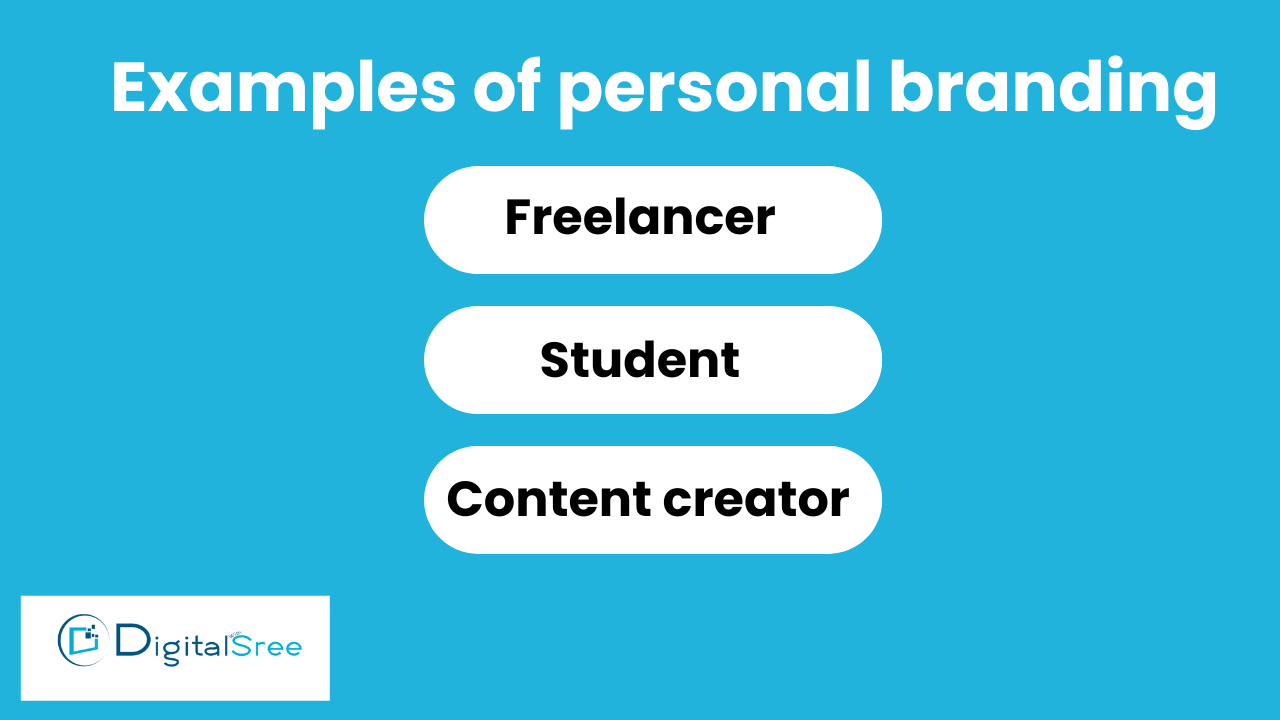
1. Freelancer
The personal branding of freelancers is all about building trust and demonstrating expertise. Since clients do not have personal connections with you, your online profile is your identity as a brand. The freelancer may provide client testimonials, case studies, or even the before-and-after results of their projects to demonstrate their skills. For instance, an expert in digital marketing can explain how they boosted the number of visitors to their site or increased their conversion rates for clients.
Furthermore, providing useful tips such as "how to attract customers" and "common mistakes that companies make" will make you a professional. Platforms such as LinkedIn or personal portfolios, as well as websites, allow freelancers to showcase their work. As time progresses, their reputation grows, and clients are attracted with better pay, which reduces the necessity to constantly look for work.
2. Student
Personal branding is important for students who are just beginning their careers. Instead of waiting for graduation students can start by establishing the basis of their own LinkedIn profile that demonstrates their talents and accomplishments in the field, accomplishments, and certifications.
A sharing of experiences of learning, such as the courses you've taken and the strategies you're learning, or even a handful of smaller projects you're working on, can demonstrate your progress and dedication. For instance, students studying digital marketing could blog about SEO strategies and campaign concepts, or mini-projects' results.
The majority of employers prefer candidates who are driven by their own work, and having a well-constructed and well-organised online presence can give a candidate an impression, even if they have no previous experience in the field.
3. Content Creator
The image of creators of content is based on transparency, reliability and worth. On YouTube, Instagram, or blogs, content creators create their own image by publishing videos that entertain, educate or resolve issues for their fans.
For instance, the author of digital marketing content can post tutorials, tips and other information related to their area. As time has passed, their audience will start to identify them in this specific sector. The consistency of their style, tone, and design will increase the credibility of their brand.
Interacting with your followers and responding to their feedback while being mindful of the needs of the target audience are vital. As the number of followers grows, new opportunities are created, such as sponsorships, partnerships, brand collaborations, and partnerships naturally happen.
Final Thought
No matter your role, whether it's writer, freelancer, or scholar, personal branding is all about making your mark every day. If done correctly, it will help people feel more confident about your character, make them think of your name, and inspire them to select you over the other candidates.
Common Mistakes to Avoid
Avoid these mistakes when creating the personal branding of your brand.
Not selecting the right niche
- Being inconsistent
- Copying others
- Ignoring your audience is not the best strategy
- Focusing only on selling.
Benefits of Personal Branding
Here are the long-term advantages:
- An online brand with a strong identity
- Better career opportunities
- Potentially higher income
- Trust and Credibility
- More networking opportunities
Personal Branding vs Business Branding
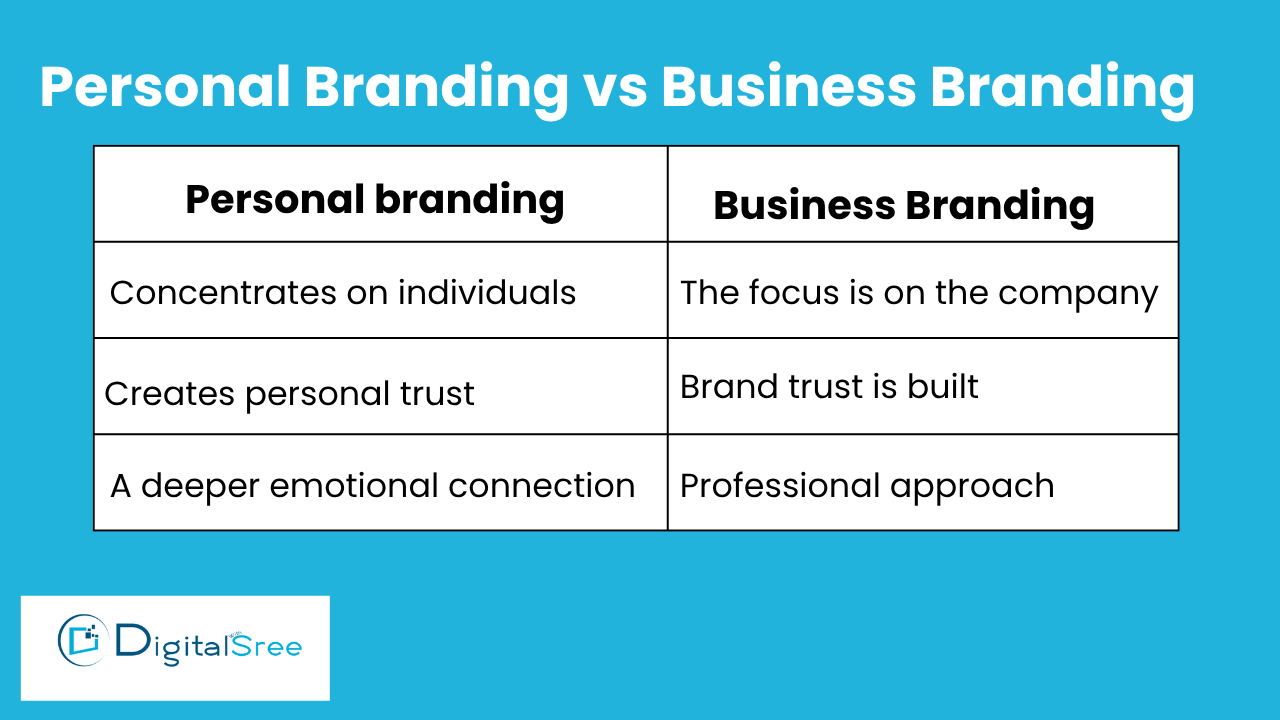
Concentration
Personal branding focuses on people's personalities, abilities and beliefs. Business branding is focused on the brand's identity as well as its products and services.
Trust Building Trust
Branding that is personal builds trust through providing authenticity and an authentic experience. Business branding creates trust in brands through consistency, trustworthiness and customer satisfaction.
Connect
The personal brand can create a more emotional connection with the viewer. Business branding is a more formal and organised approach.
Conclusion
If you're aware of the importance of your personal brand, it is now the right moment to take action. Your personal brand does not require a quick rise to fame; instead, it's about becoming recognised for the specific characteristics that distinguish you from other individuals. Make sure you are able to provide value in small steps, but be aware that your efforts could gain trust and respect in your area of expertise.
Remember that creating your own personal branding is a constant process rather than a quick project. As your skills, knowledge and life experiences grow, the personal brand's reputation - if prospective employers or freelance clients/business opportunities notice your consistency due to the creation of an outstanding image of your personal brand throughout time, they will not show up by chance, and because other people see your uniqueness! It's the right moment to begin creating your future. Take your first step now!
FAQ
1.What is personal branding?
The process involves establishing a distinct identity and reputation built on your abilities and experience
2.What is the purpose of personal branding?
It can help build trust, increase opportunities, and increase your career advancement.
3. How to build a personal brand?
Find a niche, produce useful content, remain on track, and engage with your readers
4. What is your personal brand help in the advancement of your career?
Your content goes here. Edit or remove this text inline or in the module Content settings. You can also style every aspect of this content in the module Design settings and even apply custom CSS to this text in the module Advanced settings.
5. Can personal branding help in freelancing?
Yes, a strong personal brand helps freelancers gain trust, attract clients, and charge higher rates.