
Impact of Social Media on Students: Positive and Negative Outcomes

The impact of social media on students is significant because it has become a regular part of their everyday lives. Students use social media platforms to learn new topics, communicate with classmates and teachers, and stay updated with information from around the world. These platforms provide easy access to educational videos, study notes, and online learning communities that help students understand concepts more clearly. Social media also allows students to share ideas, ask questions, and explore interests beyond textbooks, making learning more flexible and interactive.
However, the impact of social media on students includes both positive and negative outcomes. While it supports learning and communication, excessive use can lead to distraction, poor concentration, stress, and sleep problems. Constant comparison with others, online pressure, and long screen time can affect confidence, mental health, and academic performance. Overall, the effect of social media on students depends on how it is used. With proper guidance, time control, and awareness, social media can support student growth. Without balance, it can become a source of stress rather than a helpful learning tool.
What Is the Role of Social Media in a Student's Life Today?
What is social media? Social media has many functions in the daily lives of students. For many students, it's more than only a place to communicate or post photos. It has transformed into an environment where they can study to share ideas keep themselves informed, and interact with others. Students make use of these platforms to search for studies materials and join educational groups. They also take advantage of quick explanations, and ask questions of their teachers or peers. They also stay informed about the latest developments, news and opportunities to help their personal or academic development.
Students also utilize social media for networking and entertainment. They are able to stay connected with their Known people, form communities, pursue hobbies and showcase their personalities. Videos reels, memes and other content that is creative can give you a break and an escape from the stress of studying and make social media an integral aspect of students' the time off.
Positive Impact of Social Media on Students
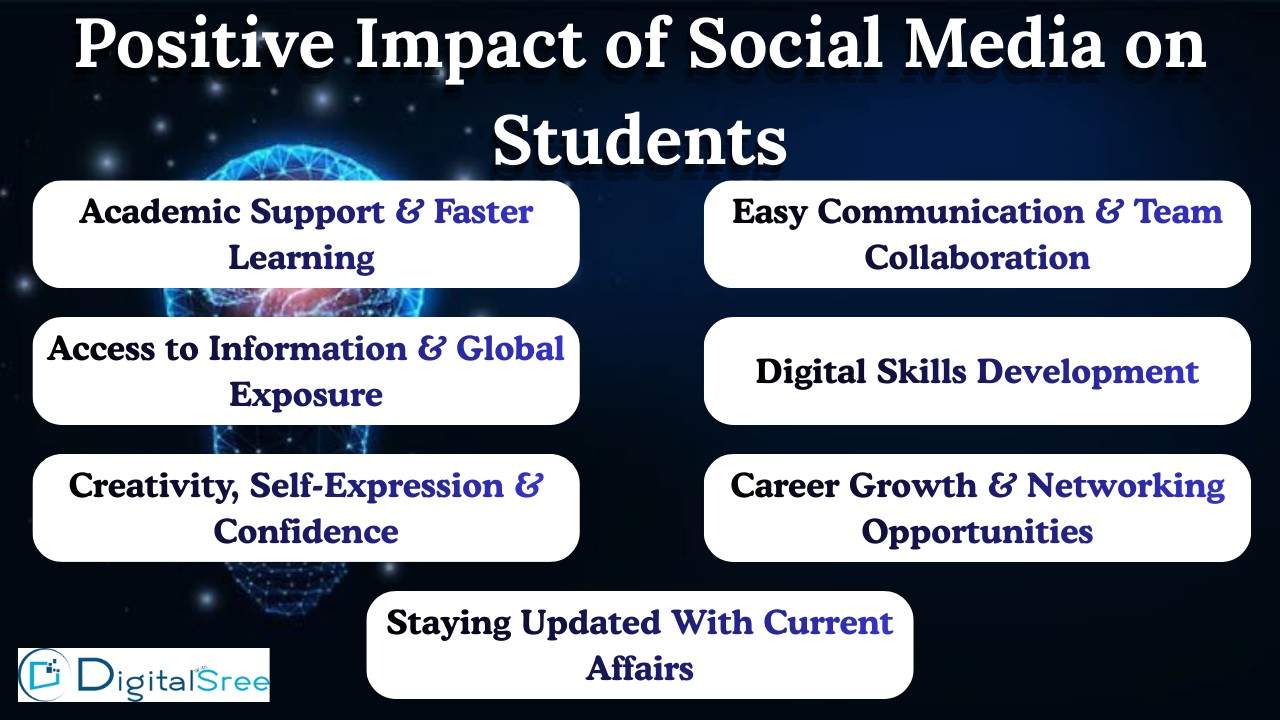
Academic Support & Faster Learning
One of the major positive impact of social media on students is the improvement in academic assistance. Students can get access to free AI tools, learning videos, as well as notes on study, tutorials and discussion groups in minutes. Platforms such as YouTube, Telegram, and educational communities help students in understanding complex subjects in a clear manner. This speeds up learning and allows education to be more adaptable. This means that the impact of social media on students life can be more beneficial when used to study.
Easy Communication & Team Collaboration
Social media allows communication to be quick and simple for students. Chat rooms, online communities, and forums and chat rooms allow students to discuss their assignments or ideas, as well as complete projects in a group. This helps in group collaboration and learning through classmates' interaction. It also helps in peer learning and team collaboration. The impact of social media on students is beneficial as it promotes collaboration and enhances communication skills.
Access to Information & Global Exposure
An additional positive impact of social media on students is the ability to access endless information. Students can access educational websites as well as experts and institutions across the globe. This exposure to the world helps them learn about different cultures, ideas and perspectives. They also gain knowledge beyond the limits of textbooks, enhancing the effect of the internet and social networks in student life.
Digital Skills Development
Using social media helps students develop important digital skills. They are taught how to conduct search online, write content using digital media, interact with others online and utilize modern tools. These skills are crucial in the current educational and professional context. It is important to understand that the impact of social media on students can be beneficial as it helps them prepare for their future careers in digital media.
Creativity, Self-Expression & Confidence
Social media allows students an opportunity to express their talents by writing, video or art work. It encourages self-expression and increases confidence, particularly for students who struggle to talk in public. The positive impact of social media on students ' lives is that it lets them discover their talents and get feedback from a larger audience.
Career Growth & Networking Opportunities
Social media is also a great tool for the development of students' careers. Platforms such as LinkedIn, Instagram, and X let students interact to professionals, stay on top of current trends in the field, and also learn about job openings and internships. These platforms show the impact of social media for students when it comes to determining their career paths early and establishing professional networks.
Staying Updated With Current Affairs
Students make use of social media platforms to stay updated of current events, global news, and education updates. The news pages, the academic channels, as well as expert opinions can help students stay informed of current events all over the world. The positive impact of social media on students increases their knowledge and builds critical thinking when the information is utilized appropriately.
Negative Impact of Social Media on Students
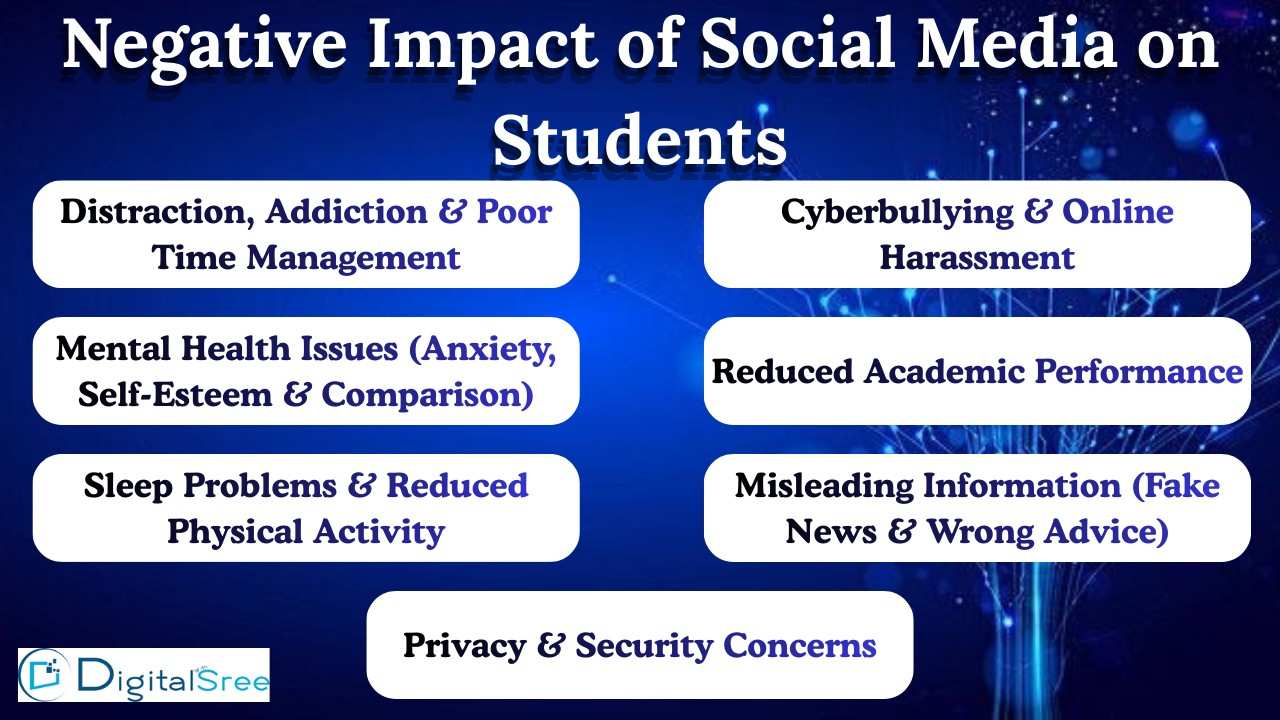
Distraction, Addiction & Poor Time Management
One of the major negative impact of social media on students is the constant interruption. Incessant scrolling, notifications, and short-form videos decrease the attention span of students and make it more difficult to concentrate on your studies. Students spend longer online than they plan to and this leads to a poor management of their time. As time passes, this habit can affect productivity and reveals what impact of social media on students' lives, which can be harmful if usage is not controlled.
Cyberbullying & Online Harassment
Cyberbullying is an issue connected to the use of social media in the lives of students. Online threats, hurtful remarks and public shame can seriously affect a child's mental health. The negative impact of social media on students frequently results in fear, isolation and stress. If there isn't enough awareness and guidance online, cyberbullying can affect confidence and behavior.
Mental Health Issues (Anxiety, Self-Esteem & Comparison)
Social media can create unrealistic expectations of beauty, success and living. The constant comparison with other people can reduce self-esteem and cause anxiety in students. It is a negative impact of social media on students' lives is particularly evident during the teens. The excessive exposure to content that is filtered can cause emotional anxiety and dissatisfaction.
Reduced Academic Performance
When the use of social media is excessive, it could directly impact academic performance. Students could delay their assignments, become distracted or miss the time for revision. This demonstrates the effects from social media for students as study time is replaced with activities on the internet. Academic failure is common because of poorly controlled social media behaviors.
Sleep Problems & Reduced Physical Activity
Screen exposure and late-night scrolling affect sleep patterns of numerous students. Insufficient sleep can affect the ability to concentrate, energy levels and overall well-being. However increasing screen time frequently takes the place of physical activity. The negative impact of social media on students impacts both their physical and mental well-being.
Misleading Information (Fake News & Wrong Advice)
There are many instances where the content posted that is shared on social networks are reliable or trustworthy. Students could encounter false information, inaccurate guidance for their studies, or even harmful guidance. If they are not able to think critically it can lead to misguided learners and their decisions. This demonstrates the negative impact of social media on students when the information is accepted without verifying.
Privacy & Security Concerns
Students often share personal information online without fully understanding the security dangers. Hacking, data misuse, identity theft, and online fraud are growing issues. These negative impact of social media on students' lives can cause safety concerns when the privacy settings, as well as online conduct, are not properly managed.
How Social Media Affects Different Types of Students
School Students
For students in school social media is simultaneously uplifting and distracting. Educational videos, apps for learning, and study groups can help them learn concepts in a straightforward manner. At an early age, children might struggle with self-control and may end up spending a lot of screen time. This demonstrates how much impact of social media on students in their daily lives at school where supervision is crucial to prevent distractions and bad behavior.
College Students
Students at colleges make use of social media more frequently to enhance their learning, social networking and for career development. It allows them to access internships, online courses, and professional networks. In the same way, continuous online interaction can help reduce focus and raise stress. The impact of social media on students at the college level is largely on the way it is utilized.
Teenagers
Students are among the more emotional category when it comes to social media. In this phase, students tend to compare themselves to others and want online confirmation. This can affect confidence, self-esteem and mental well-being. This can affect confidence, self-esteem and mental health. impact of social media on students life is more pronounced among teens because their the process of developing emotional intelligence is being developed.
Practical Tips for Students to Use Social Media Wisely

Use Social Media for Learning
Students can transform the social network into a teaching tool by following educational websites as well as teachers and subject specialists. Making short videos on concepts or joining study groups and accessing online resources could help students gain a better understanding. When they are used in the right way it is possible to see that the impact of social media on students is more positive and beneficial for academics.
Avoid Negative Comparison
The act of comparing your life or accomplishments to those of others online can harm your confidence in yourself and your self-esteem. Students should be aware that the majority of posts on social media show only the most successful moments, not the real challenges. The absence of unhealthy competition helps reduce stress and boosts wellbeing, while also balancing the impact of social media on students life.
Choose Meaningful Accounts to Follow
The following of positive educational, inspiring, and inspirational accounts can help create a more positive online space. Students should stop following accounts that trigger tension, distraction or negativity. This simple step can significantly enhance the impact of social media on students by creating better exposure to content on a daily basis.
Use Simple Time-Management Hacks
Limiting screen time, switching off notifications that are not needed and scheduling set hours for study can help manage the usage of social media. Making use of apps that monitor the time spent online can also increase awareness. These practices help students remain focused and lessen the negative effects of social media.
Follow Basic Privacy and Safety Practices
Students should not share private information like telephone numbers, addresses or passwords on the internet. Making sure that passwords are secure and privacy settings safeguard accounts from being hacked. The practice of online security reduces risk and makes it more secure and more accountable.
Future of Social Media for Students
Future of social media platforms for students is tightly linked to the advancement of technology as well as learning. AI-powered learning tools are currently integrated into social media platforms that provide individualized content, smart recommendations as well as quick help in solving doubts. Online communities that are focused on skills, education and interests are expected to increase in popularity and allow students to study in a group, share their experiences, and receive guidance by experts from around the world. These advancements can enhance your impact of social media on students when they are used in conjunction with a clear goal.
While the popularity of social media grows and expands, it will also open up new opportunities for digital careers for students. The fields of the creation of content as well as online teaching, digital marketing as well as community management, are growing quickly. But, this increased use results in increased responsibility. If there isn't a balance and awareness, it is possible that the negative impact of social media on students' lives including mental stress and distraction can rise. The future outcomes will depend on how smartly students use and adapt to these platforms.
Conclusion
It is true that the impact of social media on students can be a mixture of negative and positive results. If used properly it can enhance learning, enhances communication, improves digital literacy and opens the doors to a world of knowledge and job opportunities. It assists students in staying connected, show their creativity and get information more quickly as never before.
In the same way an excessive or infrequent use can result in disorientation, poor academic performance as well as mental health issues sleep issues as well as privacy concerns. These issues demonstrate that social media isn't all-good or bad, but it is contingent on the way students use it. If they are aware of the issues, receive instruction from teachers and parents and a healthy way of using it social media can be an effective instrument for student development instead of being a source for stress.
Frequently Asked Questions (FAQs)
1.What are the positive impacts of social media on students?
Social media helps students access learning resources, educational videos, and study communities easily. It improves communication, teamwork, and digital skills that are important for modern education and careers. When used with purpose, the impact of social media on students’ life includes better learning support, creativity, global exposure, and early career awareness.
2.What are the negative impacts of social media on students?
The negative impact of social media on students includes distraction, addiction, poor time management, and reduced academic focus. It can also affect mental health through anxiety, low self-esteem, and unhealthy comparison. Excessive use may disturb sleep, reduce physical activity, and expose students to cyberbullying or misleading information.
3.How does social media affect student life?
Social media strongly influences daily student life by shaping how students learn, communicate, and spend free time. It can make learning faster and more interactive, but overuse can reduce concentration and increase stress. Overall, the impact of social media on students’ life depends on balance and responsible usage.
4.Is social media good or bad for students?
Social media is neither completely good nor completely bad for students. It becomes beneficial when used for learning, communication, and skill development. It becomes harmful when it replaces study time, sleep, or real-life interaction. The impact of social media on students depends on how, why, and how long it is used each day.
5.How can students control social media usage?
Students can control social media usage by setting daily time limits, turning off unnecessary notifications, and using platforms mainly for learning and growth. Following positive accounts, avoiding negative comparison, and taking regular breaks also help. These habits reduce the negative impact of social media on students and encourage healthier digital behaviour.