
Types of Influencer Marketing You Should Know in 2025
Influencer marketing is the collaboration with content creators in social media and other media industries who have a loyal following on the Internet to promote the brand that are mostly digital marketing influencers. These type of influencer marketing can be blogging, YouTubers, or digital marketing influencers like social media creators who share your products or services with the audience. Different types of Influencer marketing helps brands to access new customers and build trust faster. It increases visibility because people take real recommendations not ads.
Some brands work great with different types of influencer marketing to achieve wider audiences. The others work with smaller creators to gain more promotions that influence it in a regional area or state. Its like how can artificial intelligence replace human intelligence influencers can replace sponsored ads that looks artificial.
Types of Influencers
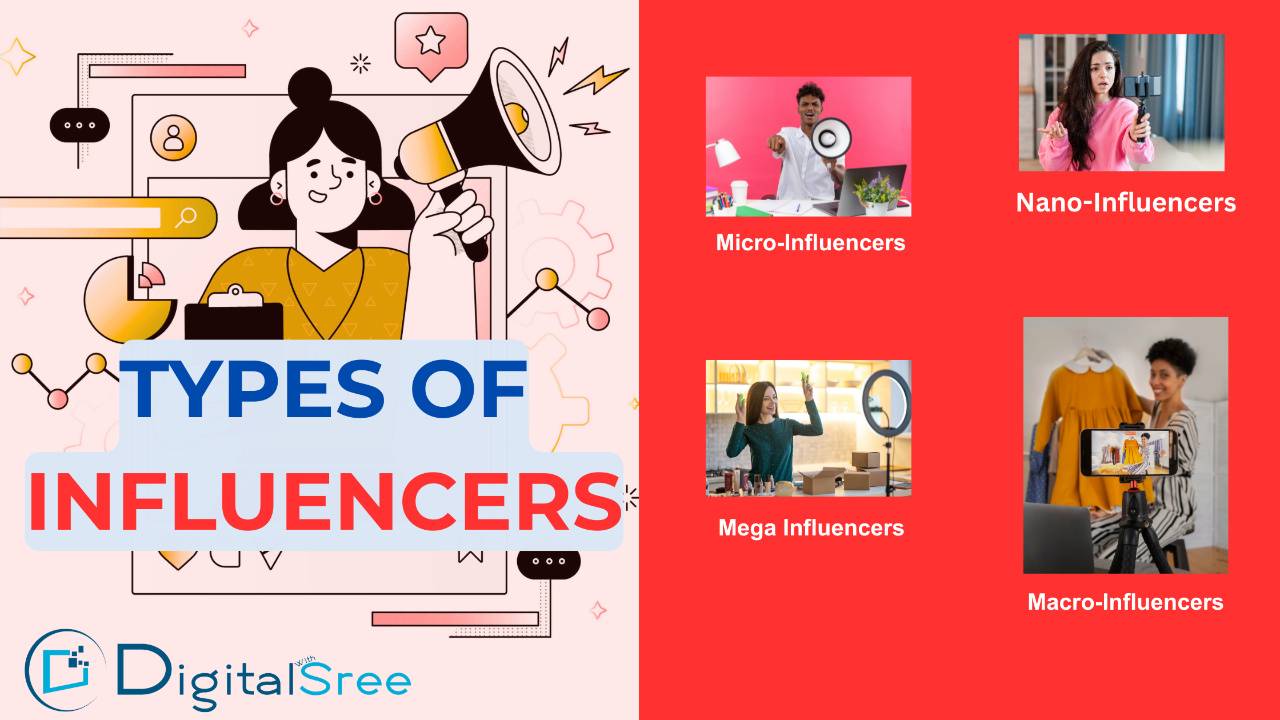
1. Mega Influencers—1 Million and Above
Mega types of influencer marketing are people who have a big online following, often over a million. This types of influencer marketing includes celebrities, athletes, or well-known public figures. Its availability is huge, making it quickly distribute brand messages. Mega influencers are usually ideal for big brands that want quick, wide exposure.A mega influencer’s audience is big but varied, so not everyone is interested in their product, but it is best to increase brand awareness not deep commitment.
2. Micro-Influencers—10,000 and 100,000
This types of influencer marketing includes micros whoses followers range is between 10 to 50k. They focus on particular content like beauty, travel, or the gym. Their followers trust them because they feel more natural and connected to their daily life. Brands work with them to gain close communities that deal with certain topics.
3. Macro-Influencers—100,000 and 1 million
They does types of influencer markeitng that have a large number of followers, between 100,000 and 1 million. They are treated as established digital marketing influencers in social media that can almost guarantee a brand’s establishment and online presence. Their reach is very wide and many will even have their own team for content creation, egy.diting and campaign strategy.
Partnership with micro-influencers is cost-effective and often has a better commitment. Their comments are real; they don’t look like ads. For SMBs, this types of influencer marketing is more beneficial.
4. Nano-Influencers—1,000 to 10,000
Nano-influencers are mostly concentrated in a particular area that has a closed follower circle. They often share personal stories, daily routines, and honest products. The audience trusts them because their content feels real. Nano-influencers’ content is more like the one that they experienced or showcases the product or service in a more natural way without any fancy dialogues or videos. Brands like to work with nano-types of influencer marketing because they create great commitment. They create real and loyal relationships with customers.
Types of Influencer Marketing
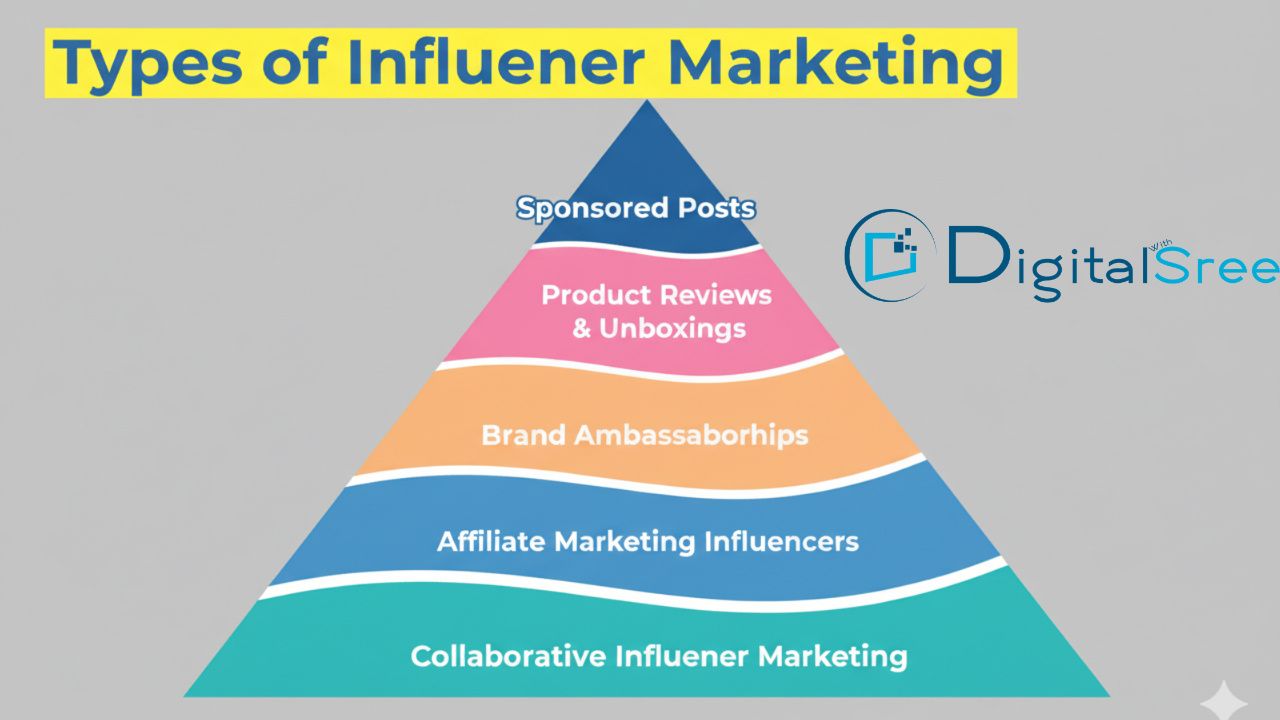
1. Sponsored Post Types of Influencer Marketing
Sponsored posts are paid promotions that digital marketing influencers create or share on their social media sites. The brand pays them to display their products or services in a comment, story, or video. The aim is to gain the trust of the followers in a natural and friendly way. These ads must have a label of #sponsored. Followers see how the product fits into everyday life, making it easier. If they are done correctly, it works best when the influence style and the brand message fit well.
2. Product Reviews & Unboxing Types of Influencer Marketing
Product reviews are unboxing products that let people see what a product is really like. Instead of just reading the details online, viewers are watching someone open the box, showing what’s in it, and sharing their sincere thoughts. Here you see the product you use, not just in ads. This helps customers decide whether they are worth their money or meet their needs.
These videos create confidence between creators and the audience. When the influencers share their true opinion, people listen. A good overview can make someone turn to buying the product. This is the reason why product evaluations and unboxing are so popular these days.
3. Brand Ambassadorships Types of Influencer Marketing
The brand’s ambassadors are a long-term types of influencer marketing between the brand and the trusted person. The brand ambassador represents the brand in everyday life, like on social media, or even wears or uses their products. Like, they use the products, share their experiences, and help others see the value of the brand. This seems natural because it comes from a person who is already loved and trusted.
Unlike single promotions, ambassadors build deeper relationships. The ambassador becomes part of the brand’s image and history. Their constant support retains the brand in the minds of people.
4. Affiliate Types of Influencer Marketing
They don’t just post. They influence, imagine your favorite creator drops a product link mid-story. It feels natural, Unscripted. You click, curious. That click matters. Behind the scenes, it’s an affiliate link. Every sale through that link earns them a commission.
Brands love this. No big upfront spend. No risky campaigns. Just pay for real results. Influencers love it too. Their word holds power. Followers trust them more than any ad screaming for attention.
5. Collaborative Types of Influencer Marketing
Collaborative types of influencer marketing isn’t just a deal. It’s teamwork. A mix of voices, ideas, and vibes. Brands don’t hand influencers a script—they hand them trust. That’s the secret. Influencers bring their own flavor, their own spark. The result? Content that feels real, not rehearsed. Something people actually want to watch, not skip.
Brands gain trust that can’t be bought. Digital marketing Influencers get to tell stories that matter. Shared values shine through—not in big, loud ads, but in quiet, honest moments. That’s where lasting impact lives.
Importance of Influencer Marketing Matters in 2025
Even though there are lots of free AI tools for digital marketing to create ads In 2025 people trust different types of influencers marketing vidoes and opinions rather than creative advertising. Feels more real that way. User-generated content is the heart of it. When an influencer shares a post that looks like a moment, not a campaign, followers see truth. Not scripts. Not slogans. Just real life. You don’t stop an ad just because it’s a famous brand but pause when you see a similar face.
The returns from influencer marketing are big. Bigger than many old-school ads. And social media? It’s the playground—Instagram, YouTube, and TikTok—all buzzing. One single post from a known face can reach thousands or even millions. In 2025, it’s not just about reach. It’s about realness. Trust. Those moments that spark belief. UGC brings that spark. A random photo, a short clip, a quick review—suddenly, it’s proof. Not polished, not perfect, but honest branding in marketing gets a heavy push with the influencers markeitng. Influencer marketing also boost the scope of ecommerce marketing in social media.
The Right Way to Choose The Types of Influencer Marketing for Your Brand
1. Realize Your Marketing Goals
Knowing your right marketing goals may sound simple. But it’s not but know what you really want. Maybe it’s more eyes on your brand. Maybe it’s more sales. Or maybe, it’s growing that loyal audience that sticks around. Goals give direction, and they tell you where to aim.
Without the the right types of influencer marketing It’s a problem. If you post random stuff with your influencer, you will only end up spending money that goes nowhere. It’s like driving blindfolded—fast, but pointless. Clear goals with right influencers keep you grounded. They shape your moves, your tone, and your people.
2. Understand Your Target Audience
In today’s digital world you need to know your audience’s age, their scroll habits, and what they double-tap at midnight. You study that. You learn their world.
Then comes the match. The right influencer already speaks their language. No fake tone. No awkward fit. Just smooth, natural flow. When followers see that, they trust it. They feel it’s for them. That’s when engagement jumps. That’s when followers turn into customers—without even realizing it happened.
3. Consider Your Budget
While selecting an influencer marketing budget, you definitely need to have a plan. You can’t just dive in blind. You have to know how much you can spend before the first post. Some influencers charge a lot. Some don’t. It’s all about their platform and the trust people have in them.
Budgeting keeps you sane. It’s the line between smart spending and chaos. You break it down—content, ads, tracking tools, all of it. Every rupee counts. Every click, too. When the money flows right, the results do, too. Simple math. Almost. This helps you measure real results without overspending. A smart, smart budget keeps your marketing balanced and focused on the best return.
4. Focus on Authenticity
Authenticity? That’s the word everyone throws around—but few get it right. In influencer marketing, it’s everything. You want people who actually vibe with your brand. Not just someone reading off a script.
Audiences aren’t dumb. They spot fake smiles from a mile away. Real influencers? They speak from experience. They show what they use and what they love. Sometimes their marketing content may not look like the sponsored ads, but it’s real. And that’s what sticks. A small creator with honest fans beats a big one with empty likes any day.
Challenges of Influencer Marketing
1. Finding the Right Influencer
Finding the right influencer isn’t luck. It’s strategy mixed with gut feeling. You look for someone who gets your brand. Someone whose vibe matches yours. The best ones? They don’t just post—they connect. Their followers actually listen, comment, and are. That’s gold.
It’s not about big numbers. Never was. Ten loyal fans beat a thousand silent ones any day. Check their tone, their style, and their story. See who they’ve worked with before. If it feels real, it probably is. The right types of influencer marketing doesn’t just boost sales—they make people believe. And that’s the real win.
2. Measuring ROI
It’s a difficult task to measure ROI in influencer marketing, as results are not always clear. Not every like or comment leads to a sale. Some objectives, such as brand trust or brand awareness, are difficult to measure. Seriously, it’s hard to track how online influence translates into real business or long-term loyalty. Like different platforms also provide different data that makes it difficult to compare results. These gaps make tracking ROI complicated and time-consuming.
3. Managing Costs
Digital marketing Influencers fees can vary widely by reach and platform. Some influencers charge high prices that don’t always yield the right results. Small brands may struggle to stay on budget and still reach the right audience. Without careful planning, it’s easy to spend too much on campaigns that give less return.
Example of successful influencer marketing
One good example digital marketing influencers is Huda Kattan, founder of Huda Beauty. Hoda began as a beauty blogger and makeup artist. She shared reviews and product testimonials on social media channels like Instagram and YouTube. Her authentic content and testimonials quickly built trust with millions of followers. When she launched her first product—a set of false eyelashes—it sold out almost immediately to online community. Her personal brand became the foundation of Huda Beauty’s explosive growth.
Conclusion
Nowadays we can see lots of free AI tools for digital marketing in creating ads for brands but different types of Influencer Marketing can connect to people emotionally and reach a wider audience. Micro- and nano-influencers create trust among customers. Like Partnership and collaboration strategies empower influencers and turn promotions into real conversations. The right mix depends on your goals, audience, and budget.
Strong brand promotion comes from the Types of Influencer Marketing who stay true to your brand. partnership with people who push your brand values and speak authentically to your audience. When a partnership feels genuine, people notice. This simple approach can increase trust, awareness, and sales over time and this is also a good example on how to make money on instagram or any other social media platforms. .
FAQ
1. What types of influencer marketing works for small businesses?
For small businesses, it’s better to choose Micro or Nano depending on the budget. They can recommend local areas and target a narrower audience.
2. Can I choose different types of influencer marketing in 2025 for business?
Yes, it gives a more honest and natural way to market. In 2025, people are looking for more relevant content than people who look like salespeople.
3. How much does it cost for an influencer?
We cannot predict the influencer’s cost; they can charge depending on the influencer and the social media platform they use. Nano influencers can usually charge between 2,000 and 10,000, and others can go up to lakhs.