
The Untold Power of Blogging in Digital Marketing — Command Authority, Capture Attention, and Why It Still Wins

Here’s something nobody tells you when you start a business: the traffic doesn’t just show up. You have to earn it, page by page, question by question. And honestly? Blogging is still one of the cheapest, most stubbornly effective ways to do that — despite marketers declaring it “dead” pretty much every year since 2012.It’s not dead. It’s just harder now, which is a different problem entirely. Blogging in digital marketing, at its core, is about turning what you already know into something people are searching for. Not filler. Not keyword soup dressed up as an article.
Real answers, written for real people, that a search engine also happens to like. Startups lean on it to get discovered. Bigger brands lean on it to stay in the conversation. just look at any list of the best digital marketing blogs and you’ll see names from both ends of that spectrum And quietly, in the background, it’s doing a lot of the heavy lifting behind influencer campaigns and brand-building work that tends to get all the credit somewhere else.
What Is Blogging in Digital Marketing, Really?
Ask ten marketers and you’ll get ten answers, half of them contradicting each other. Here’s the one that actually holds up under pressure: blogging in digital marketing is the ongoing habit of publishing useful content on your site to pull in a specific audience — and keep them coming back. That’s the whole idea.
No trick to it If you Google what is blogging in digital marketing, this is basically the answer you’ll land on everywhere But if you’re trying to grow a business, “what is blogging in digital marketing” isn’t even the right question. The real one is: what’s it for? And the honest answer is — it’s how you show up in the exact second someone’s searching for the thing you happen to sell.
1. From Personal Diaries to Business Weapon
Blogs started as diaries. Actual online diaries — people rambling about their day, their opinions, whatever crossed their mind, and a small crowd of strangers reading along for fun. Businesses caught on eventually. They noticed people were using blogs to find answers, and answers are where customers live. So blogging in digital marketing grew out of something pretty unglamorous — companies realizing readers trusted this format more than they trusted an ad.
2. A Blog Isn't Just Another Web Page
A regular page just sits there. A blog moves. New posts, evolving ideas, an actual voice behind the words. It’s not a tweet either — social content burns fast and disappears, while a solid blog post can keep pulling in traffic two or three years after you hit publish. That kind of staying power is really the whole point.
Why Blogging Still Matters (Maybe More Than Ever)
1. It drives organic traffic that compounds
Every post is a new page for Google to index — a new shot at ranking for something a real customer typed into the search bar at 11pm. Most posts flop on day one, if we’re being honest. They climb slowly, over months, as they pick up links and get shared around.
2. It earns trust you genuinely can't buy
A blog that answers real questions, without constantly selling, earns something no ad budget can buy: credibility. A competitor can copy your product overnight. They can’t copy two years of consistently useful content.
3. It brings in people who are already halfway sold
Someone who lands on your post from a Google search console typed that question in for a reason — they’re not window shopping. If your answer actually helps them, a good chunk will sign up, download something, or reach out on their own
4. It fuels everything else you create
One well-written post can turn into a LinkedIn update, a Twitter thread, an email blast, a script for a YouTube video. Think of your blog as the source material, not a box to check.
5. It keeps paying you back long after you've moved on
Ad spend dies the second the budget runs out. A post you wrote eighteen months ago might still be quietly bringing in your best leads — for free. That kind of long-tail return is exactly why finance-minded teams have started taking blogging seriously again.
The Best Digital Marketing Blogs That Prove This Works
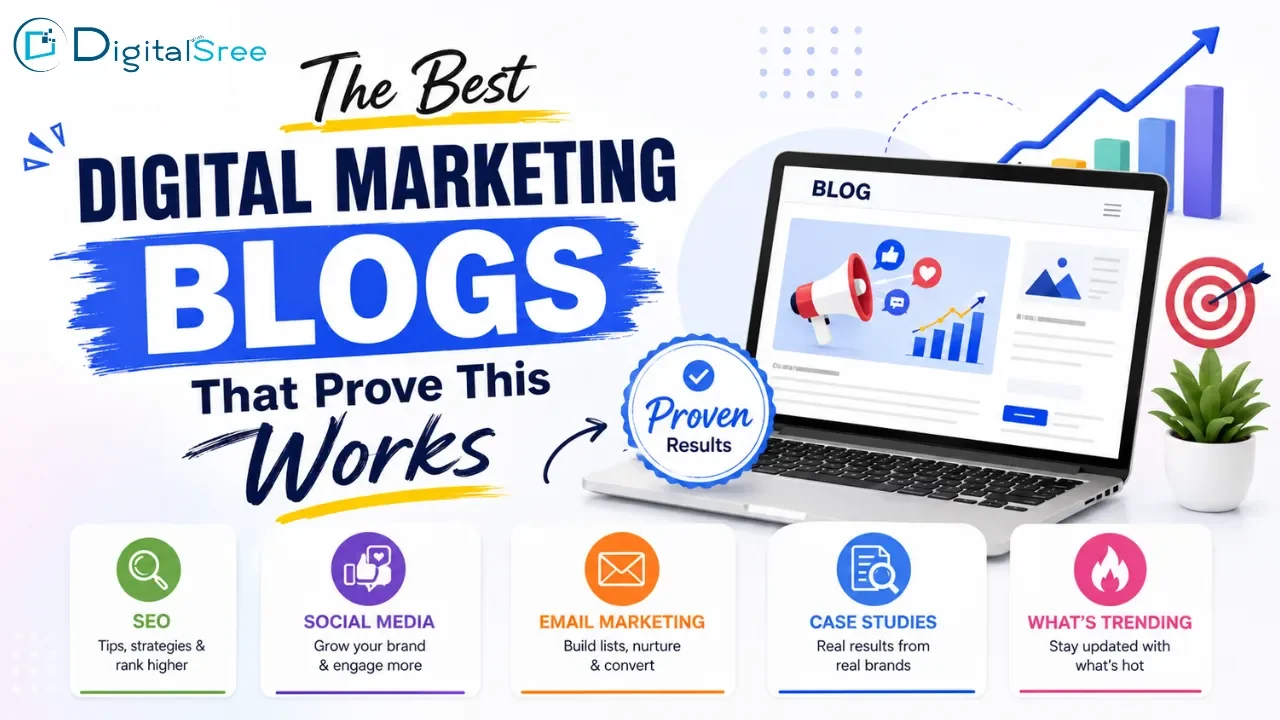
Don’t take my word for it. Go look at the best digital marketing blogs actually doing this well, and you’ll see the pattern for yourself. Reading the best digital marketing blogs isn’t about copying their topics. It’s about noticing what earned your trust in the first place, then doing that — in your own voice.
1. SEO
Ahrefs, Moz, and Search Engine Journal show up on nearly every list of the best digital marketing blogs, and it’s usually because they publish data instead of hot takes.
2. Social Media
For social media marketing Sprout Social and Later are worth following for content-calendar frameworks and organic reach strategy.
3. Email Marketing
For email marketing, Mailchimp and Klaviyo’s blogs are the ones marketers actually bookmark — segmentation and deliverability, done right.
4. Case studies and how-tos
HubSpot’s marketing blog and Neil Patel’s blog land on most lists of the best digital marketing blogs for a reason — walkthroughs, not just theory.
5. What's trending
Most of the best digital marketing blogs are now covering AI-assisted content, short-form video (Reels, Shorts, TikTok), and voice search are dominating editorial calendars this year, for better or worse.
Don’t take my word for it. Go look at the best digital marketing blogs actually doing this well, and you’ll see the pattern for yourself. Reading the best digital marketing blogs isn’t about copying their topics. It’s about noticing what earned your trust in the first place, then doing that — in your own voice.
How Blogging Actually Works, Step by Step
1. Start with keyword research, not inspiration
Before you write a single word, figure out what people are actually typing into Google. Ahrefs, SEMrush, even the free Google Keyword Planner will get you there. You’re hunting for the overlap between “people search this a lot” and “I could realistically rank for it.”
2. Publish, then push it out yourself
Hitting publish is the easy 10%. Email your list. Post it to social. Drop it wherever your audience already hangs out — niche forums, relevant threads, whatever’s real for your industry. A post nobody promotes tends to just sit there, invisible.
3. Then actually look at what happened
Google Analytics and Search Console will tell you which posts are pulling their weight, which ones people bounce off immediately, and which keywords you’re this close to ranking for. Let that data pick your next ten topics — don’t just let it sit in a dashboard nobody opens.
Starting a Blog for Digital Marketing — No Fluff
1. Pick a lane and stay in it
The single biggest mistake new bloggers make is trying to cover everything. “Marketing tips” is too broad to rank for and too vague to matter to anyone. “Contract negotiation advice for freelance UX designers” — now that’s something you can actually own.
2. Choose a platform that won't fight you
WordPress.org, self-hosted, is still the default for good reason. Plugins like Yoast or Rank Math handle a lot of the SEO grunt work, and you keep full ownership of your content. Pair it with solid hosting — SiteGround, WP Engine, Cloudflare — and a lightweight theme, and you’re not constantly fighting your own tech stack.
3. Do the keyword research properly, not lazily
Build topic clusters: one broad pillar page, surrounded by narrower posts linking back to it. That structure tells Google you actually know the subject in depth. Weigh search volume against difficulty, and skip keywords you have zero real shot at.
4. Actually build a calendar and follow it
Consistency wins over brilliance, every time. A simple spreadsheet — target keyword, status, publish date — keeps you from vanishing for three months and then wondering why traffic flatlined.
Where Your Traffic Really Comes From
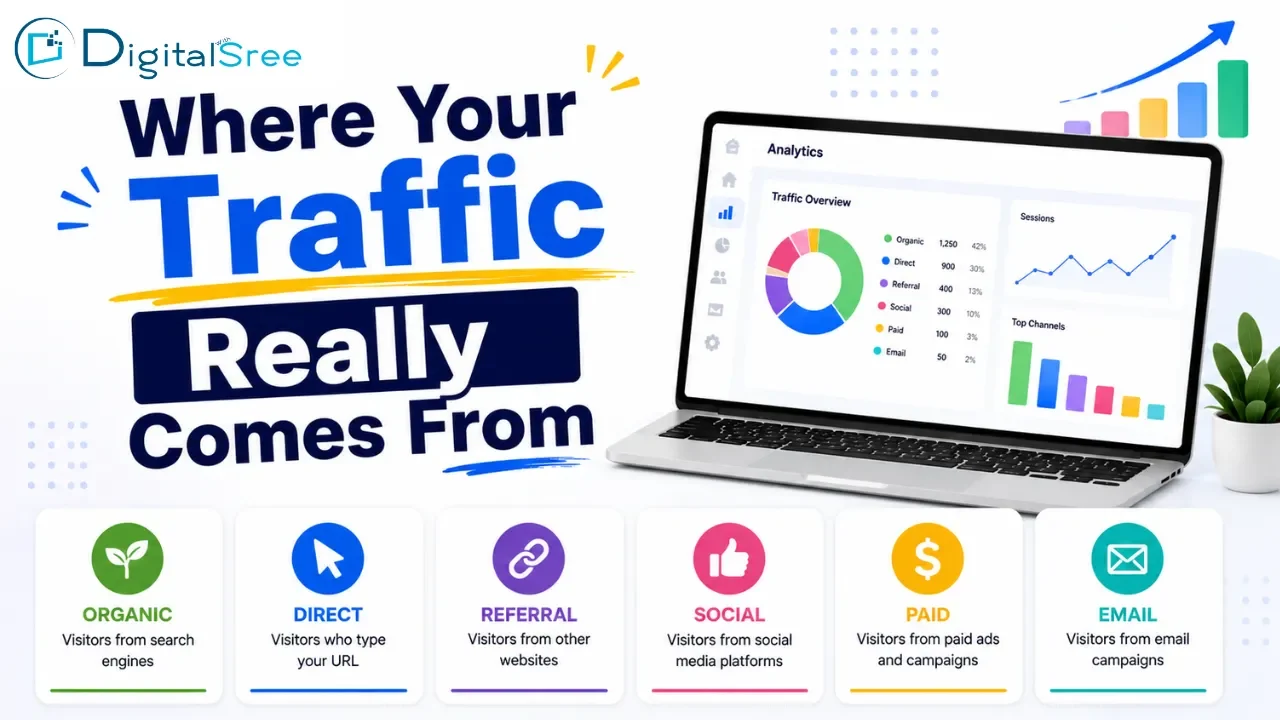
1. Organic – Unpaid search traffic, the whole reason blogging in digital marketing exists. Slow to build, cheapest, and the most durable by far.
2. Direct – People typing your URL from memory or clicking a saved bookmark. Grows quietly as your brand sticks in people’s heads.
3. Referral – Other sites linking to you. Good content earns this on its own; nobody links to a mediocre post out of pity.
4. Social – Clicks from shares on LinkedIn, X, Instagram, wherever your content gets passed around by actual people.
5. Paid – Google, Meta, LinkedIn ads. Blogging is mostly organic by nature, but a strong post doubles nicely as a landing page for paid campaigns too.
6. Email – Clicks from your newsletter. Dropping your latest post into an email is one of the easiest wins that almost nobody bothers doing consistently.
Conclusion
Blogging in digital marketing was never a shortcut. It behaves more like compound interest — slow and unremarkable at first, then suddenly not slow at all. Every post is one more indexed page, one more shot at ranking, one more reason someone trusts you before they’ve even spoken to your sales team. Companies that treat it as real infrastructure — not an afterthought squeezed in between ad campaigns — tend to quietly outlast the ones burning their entire budget on paid traffic.
None of this takes a huge team or a massive budget. Pick a niche. go check any of the best digital marketing blogs out there and you’ll notice they all started small too Find out what people are genuinely searching for. Publish consistently. Promote what you write. Pay attention to what actually works, and drop what doesn’t. Start with one solid post this week — that’s really all it takes to begin.
FAQ
1. What's the difference between blogging and content marketing?
Blogging is one piece of the content marketing puzzle, not the whole thing. Content marketing is the umbrella strategy; blogging in digital marketing is usually the foundation it’s all built on, since it generates most of the SEO-friendly material everything else gets repurposed from. So if you’re still asking what is blogging in digital marketing versus content marketing, just remember: one is the engine, the other is the whole vehicle.
2. How long should a blog post actually be?
Long enough to answer the question fully — not a word more. Research tends to show 1,500–2,500 words ranking well for competitive terms, but stretching a post to hit a number, without adding real value, just makes it worse.
3. How often should a business realistically post?
Two to four well-researched posts a month will always beat daily filler. Google rewards consistency over sheer volume. Pick a pace your team can actually sustain without cutting corners halfway through.
4. How long before a blog starts pulling real traffic?
Three to six months before you see anything meaningful. Six to twelve for it to really take off — longer still if your domain is new. Promotion speeds this up considerably. Patience, here, is not optional.
5. Do I need to be a naturally great writer to start one?
Not even close. Clear beats clever, every single time. If writing isn’t your thing, talk your ideas out loud and transcribe them, hire someone who actually knows the subject, or use AI to draft a starting point — just make sure a real person who understands the topic reviews it before it ever goes live.