7 Proven Types of Search Engine Marketing to Boost Your Traffic and Sales
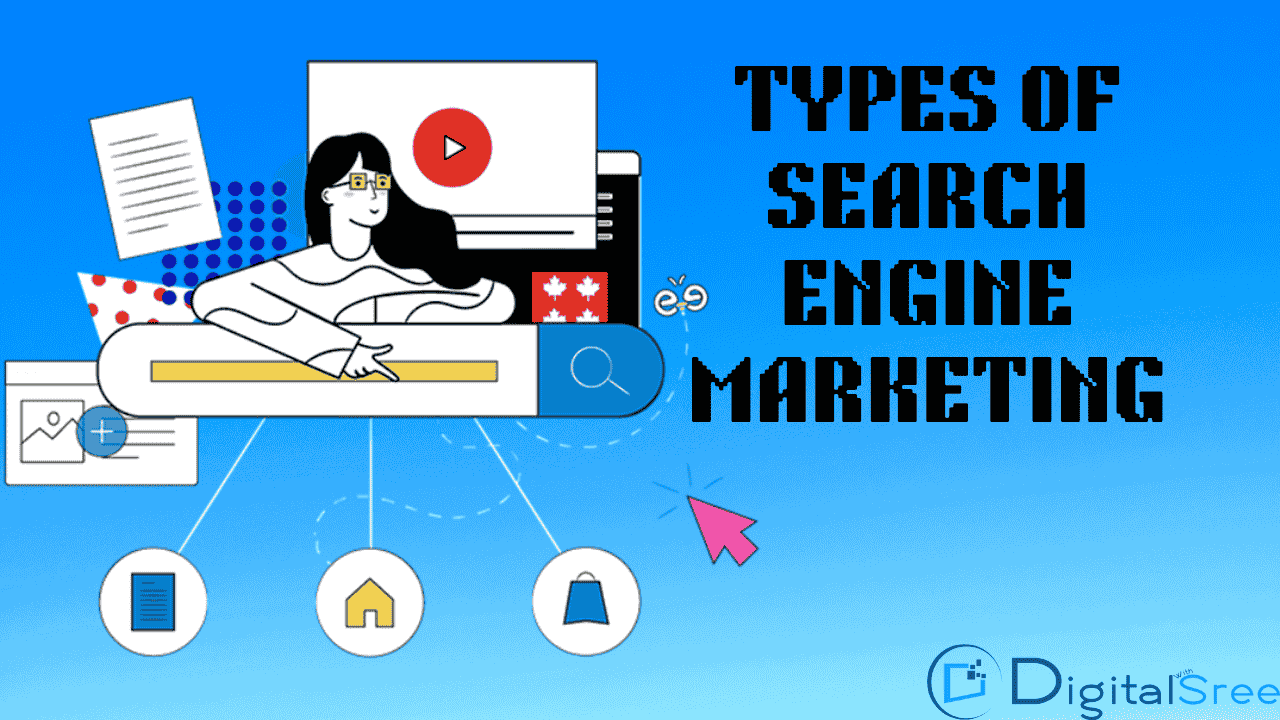
Search Engine Marketing (SEM) is one of the most effective digital marketing types for reaching potential customers with the right content at the right time. When someone searches for a product or service, SEM helps your brand appear immediately. Let us understand what Search engine marketing exactly is, its best practices, and its strategies.
What is Search Engine Marketing?
Search Engine Marketing (SEM) is a feature of digital marketing that helps your brand rank at the top of search engine results pages (SERPs) by running paid ads on search engines like Google or going organic. As a result, you can get instant traffic, leads, or sales. In 2000, SEM was just considered the combination of Pay per Click(PPC) and Search Engine Optimisation (SEO). But now, it has expanded a lot.
More companies now invest in SEM because it brings targeted traffic without waiting months for SEO. The growth is huge, and it continues to rise every year.
Search Engine Marketing (SEM) is a feature of digital marketing that helps your brand rank at the top of search engine results pages (SERPs) by running paid ads on search engines like Google or going organic. As a result, you can get instant traffic, leads, or sales. In 2000, SEM was just considered the combination of Pay per Click(PPC) and Search Engine Optimisation (SEO). But now, it has expanded a lot.
More companies now invest in SEM because it brings targeted traffic without waiting months for SEO. The growth is huge, and it continues to rise every year.
Importance of Search Engine Marketing in 2025
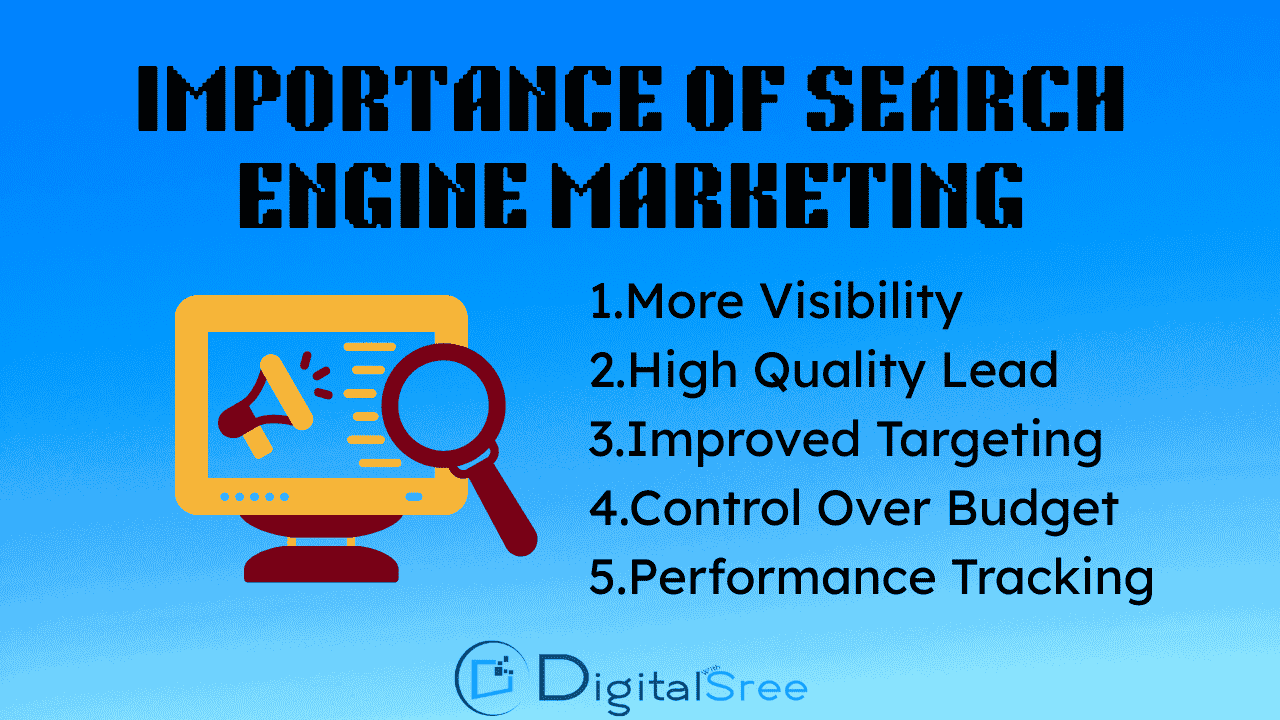
1. More visibility
With SEM, your business will appear in Google search results almost immediately, even in competitive fields with numerous players.
2.High Quality lead
Your search engine marketing ads will potentially reach more people with high intentions to make a purchase because potential customers are actively looking for your ads.
3. Improved Targeting
Your ads can be targeted to users by their interests, locations, search behaviour, device used, etc. in order to make your marketing strategy even more effective
4. Control over Budget
With Search engine marketing, you can set your own daily budget, determine bidding strategy, and even pause ads if you have a low budget
5. Performance Tracking
The importance of search engine marketing here is, you can see every click, impression, and conversion. This means your results can be monitored and evaluated in real time, so you can make adjustments to your running campaigns.
Types of Search Engine Marketing
SEM is not just one method. It has different types of search engine marketing, and each type works differently. Understanding these types of search engine marketing, you can choose the right strategy for your goals.
1.Pay per Click(PPC)-Paid SEM
Pay-per-click (PPC) means you pay only when someone clicks your ad. This includes search ads, display ads, shopping ads, and video ads.
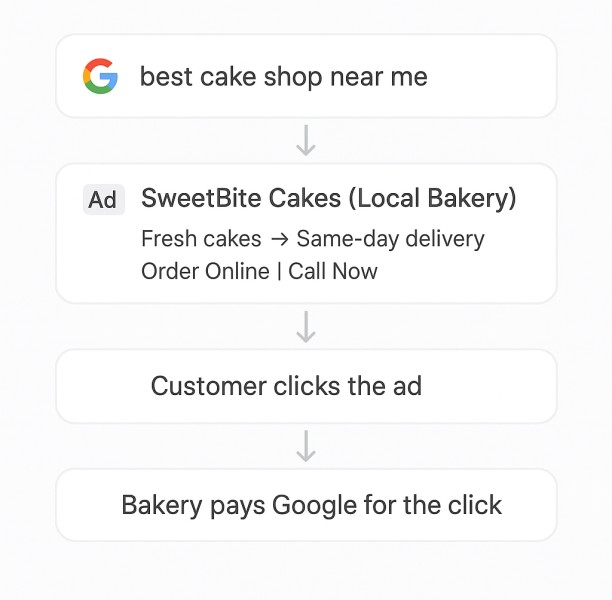

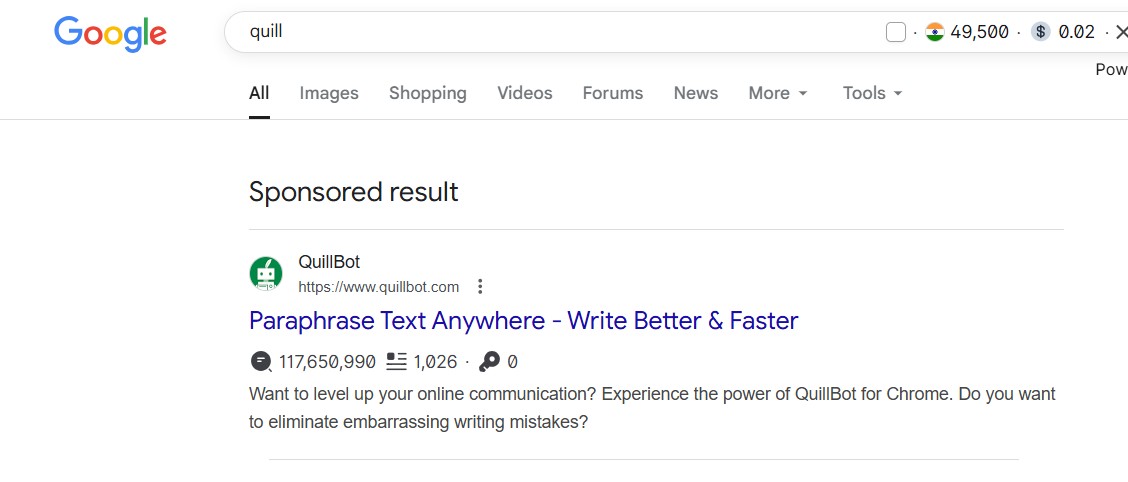
1.1.Search Ads (Paid Search Advertising)
Search ads appear at the very top of Google or Bing search results using the label 'sponsored'. Hence, Search ads bring fast traffic because they match the user intent directly.
Best for: Local, service-based businesses.
1.2. Display Advertising
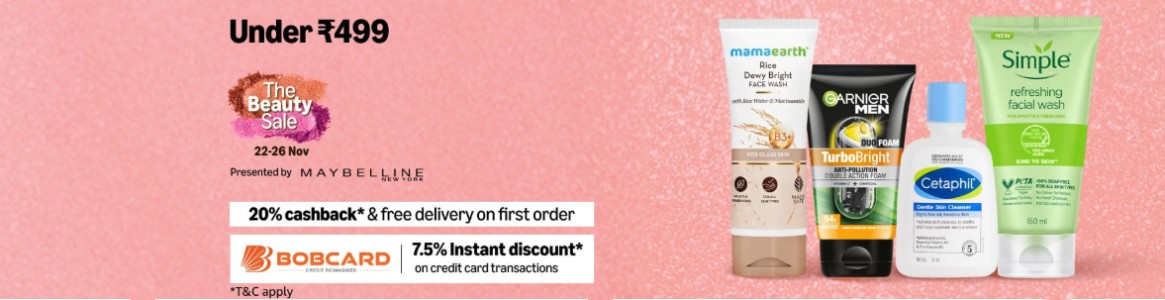
Display ads examples are visual banners on the internet on websites, apps, and YouTube partner sites. Display ads help businesses maintain a presence all over the Internet and at a very low cost.
Best for: Branding, remarketing visibility.
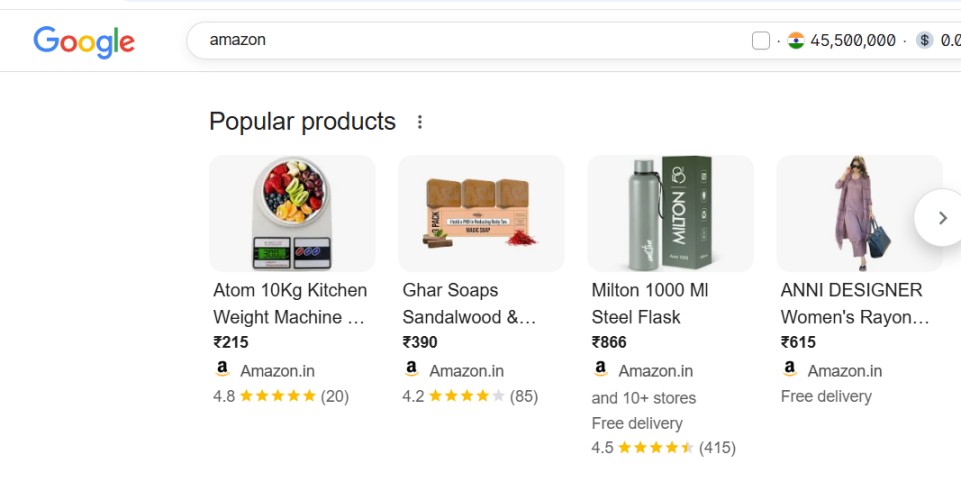
1.3. Shopping Ads (Product Listing Ads - PLA)
Shopping ads show product images, prices, and stores on Google Shopping. Shopping ads attract customers who are more likely to buy the product, substantially improving sales for fast growing stores.
Ideal for: E-commerce businesses
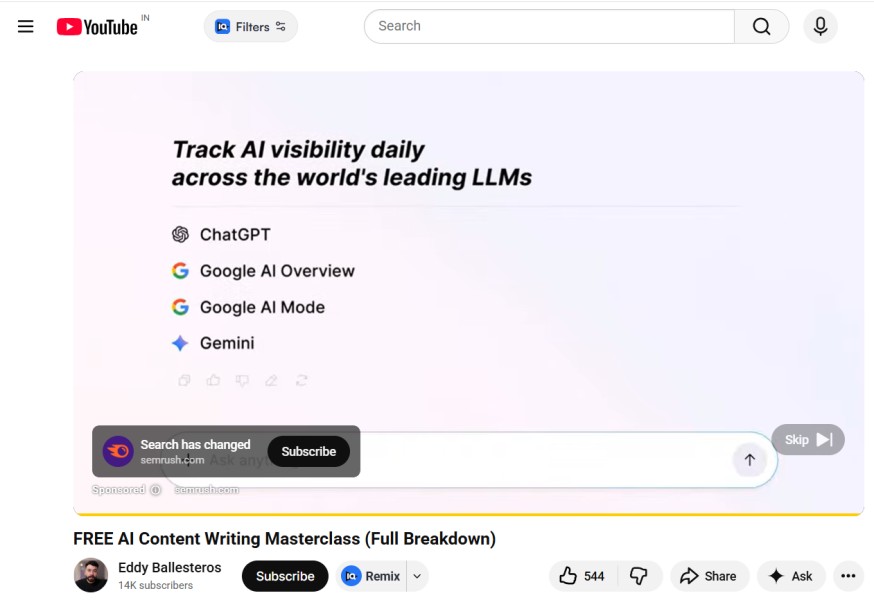
1.4. Video Advertising (YouTube Ads)
Video ads are placed in YouTube videos and can take the form of skippable or non-skippable ads and bumper ads. Video ads are great for storytelling. They also help brands build strong recall through emotion.
Best for: Brand awareness campaigns, product launches.
2.Search Engine Optimisation(SEO)-Organic SEM
SEO stands for search engine optimisation. It means making your content better, as well as the quality of the site, making it more user-friendly, and making it run better so you show up on the front of search engine results pages for free. This means you will rank better and display your website to more users in an organic way. This is the way, SEO services work.
3. Remarketing / Retargeting Ads
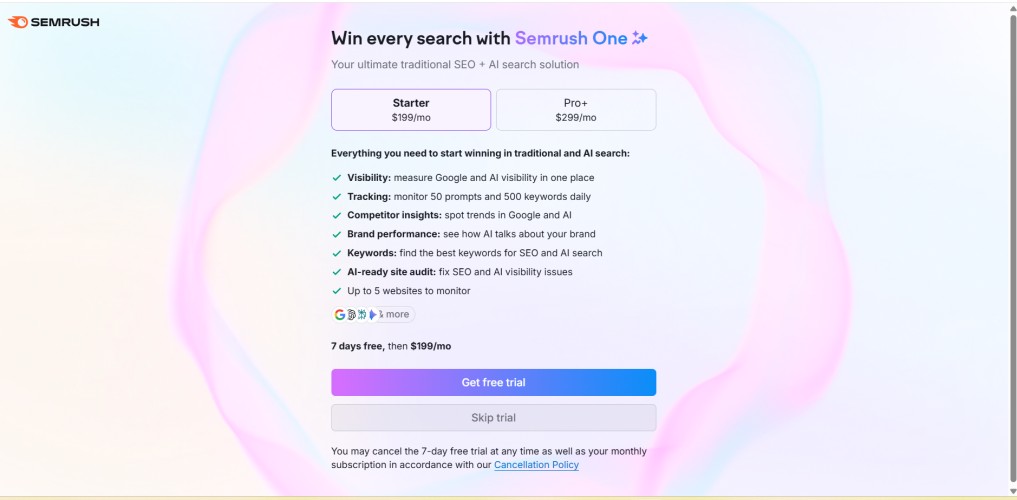
Remarketing shows ads to people who visited your website or interacted with your business. This is especially helpful for lost visitors and recovering abandoned carts (you retarget or remarket them), thus increasing opportunities for lost conversions at a much lower cost. Another example is some sites ask for permission to allow cookies. Cookies will help them to remarket to us. In Sembrush, a 7-day free trial is there, then they charge you a cost for their services, this is another example of remarketing.
Best for: Leading warm audiences and re-engaging.
4. Social Search Engine Marketing(Paid Social + Search Intent)
Social SEM includes platforms such as Meta, Instagram, and LinkedIn. It is a perfect addition to search ads by targeting users based on interests and behaviors. It spans multiple platforms for improved visibility and conversions.
Best for: Google Search campaigns.
5. Local Services Ads (LSA)
With a “Google Guaranteed” badge, Local Services Ads show above search ads, helping to gain instant trust. Ads help local service providers receive direct calls or leads from customers in proximity.
Best for: Plumbing, electrical work, salons, cleaning, repairs, other service work.
6. App Promotion Ads
Promotional ads for apps run on Google Search, Play Store, YouTube, and Display Network. They are specifically designed to increase app installs and make current users spend more time on the app.
Best for: App-focused companies, new businesses, e-commerce apps.
7.Performance Max (PMax)
An AI-powered campaign type that runs ads across Search, Display, YouTube, Discover, Gmail, Maps, and Shopping. The one benefit is that one campaign performs better than multiple separate campaigns.
Best for: businesses that want AI-driven, multi-channel advertising to get more conversions with minimal manual work.
How to Choose the Right Types of Search Engine Marketing
1. Based on Business Size
For small businesses, Search Ads and Local Services Ads can give them quick visibility and immediate leads. For larger businesses, Search Ads, and Display Ads, plus Video or Shopping Ads, can be used in a mix to start building awareness at scale.
2. Based on the Budget
If you have low funding, the best returns are on high intent Search Ads or Remarketing. Display, YouTube or Social SEM are all wide net spend options for larger budgets.
3. Based on Marketing Goal
For leads and sales, Search Ads, Shopping Ads, and LSAs are the best. For storytelling or brand reach, Display and YouTube Ads are better.
4. Based on the Target Audience
If your audience is highly likely to search on Google, Search Ads, or Shopping Ads are the way to go. If your audience is more likely to spend time on Social Media, then you should be using Social SEM, combined with search campaigns.
5. Based on Industry
For Service Industries like plumbing, salons, and repair services, LSAs and Search Ads work very well. If you’re in e-commerce, it’s all about Shopping Ads and Remarketing.
Search Engine Marketing Best Practices
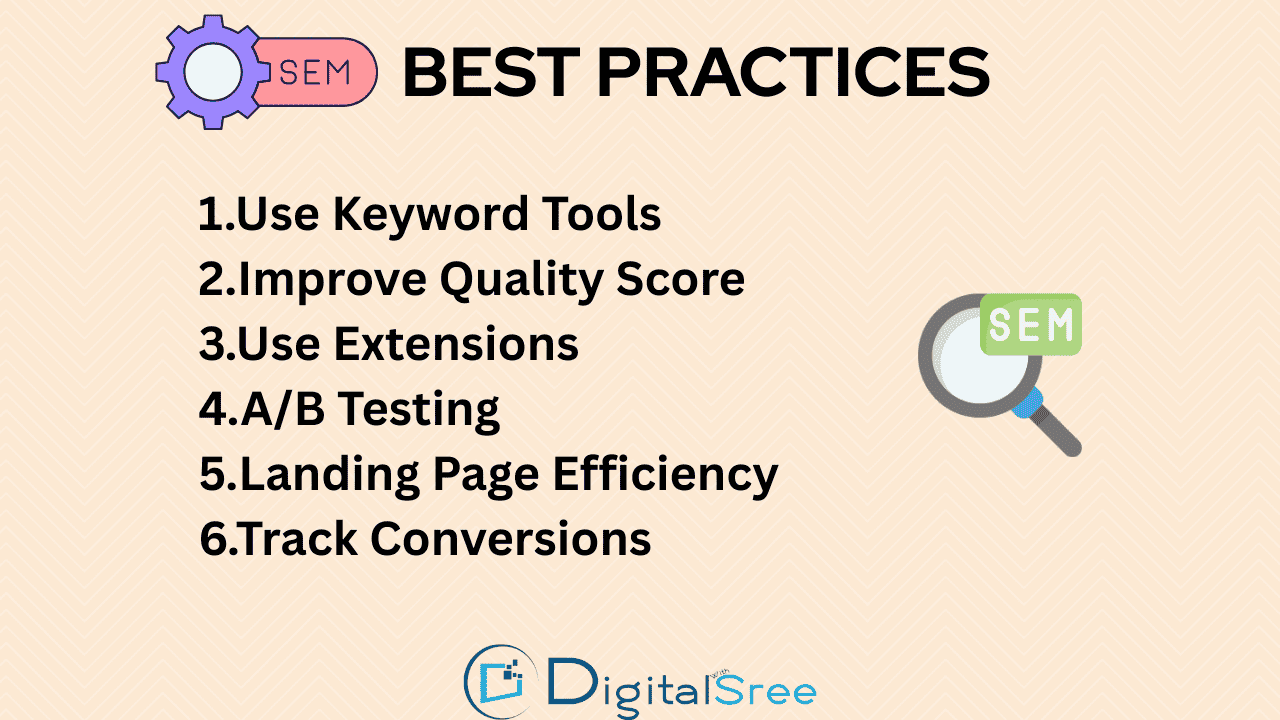
1. Use keyword tools
Using keyword tools can help find relevant keywords and help you save money spent on irrelevant keywords.
2. Improve Quality Score
Improving the Quality score can save money on ads and help get them higher placements. To improve it, focus on relevant keywords, strong ad copy, and a landing page that matches the search intent.
3. Use extensions
To help ads be more trustworthy and help them stand out, use ad extensions that provide extra information. These can include call buttons, locations, relevant links, and special offers.
4. A/B testing
There are different versions of ads and A/B testing lets you see which one works the best(keywords,visuals,messages).It reduces guesswork and works better because of what you find out.
5.Landing page Efficiency
A well-optimised landing page loads fast, matches the ad message, and guides visitors to take action. It improves conversions and makes your ad budget work more efficiently.
6. Track conversions
Conversion tracking shows what happens after your ad is clicked. This works if they call you, buy something, fill out a form, or install an app. This information is crucial to see what is actually working, and to improve your campaigns spending.
Common Mistakes to Avoid in Search Engine Marketing
1. Targeting is too broad
Using broad keywords can waste your budget. They often target audiences that are not interested. Choose specific, high-intent keywords to achieve better results.
2. Ignoring negative keywords
Without negative keywords, your ads show for irrelevant searches and attract the wrong audience. This increases cost and reduces ad performance.
3. Poor landing pages
Even strong ads fail if the landing page is slow, confusing, or doesn’t match the ad message. A clean, relevant landing page increases conversion instantly.
4. No tracking
Running ads without conversion tracking means you can't see what is working or what is wasting money. Tracking helps you optimize and get better ROI.
Conclusion
Search Engine Marketing is no longer PPC and SEO. In 2025, Search Engine Marketing includes AI,
Voice search, Video search, Multi-channel ads and Automated smart campaigns. But still,new types of search engine marketing are emerging.
Each SEM method works differently. Some bring immediate leads. Some help your brand stay visible. Your job is to match the method with your target audience and make sure your landing page gives a good user experience. By combining different SEM types, businesses can create a powerful strategy that boosts visibility, traffic, leads, and sales and make your business profitable.
FAQs
1. What are the main types of Search Engine Marketing?
The main types of SEM include Search Ads, Display Ads, Shopping Ads, Video Ads, and Remarketing Ads. These are paid advertising methods to increase visibility on search engines.
2. Is PPC the same as SEM?
No. PPC is only a part of SEM. SEM includes all paid search strategies, and PPC is the most common one used to get instant visibility.
3. What types of Search engine marketing give the fastest results?
Search Ads (PPC Search Campaigns) give the fastest results because ads appear immediately when users search for targeted keywords.
4. Which SEM type is best for small businesses?
For small businesses, Search Ads and Local Services Ads (LSA) are the most effective because they target users with high purchase intent and work well with limited budgets.
5. Are Shopping Ads considered a type of SEM?
Yes. Shopping Ads (Product Listing Ads) are a major type of SEM used mainly by e-commerce brands to show product images, prices, and details directly on search results.